
Caldwell Evolution
  • Home
  • Organizing Services
  • Coaching
    • Evolved Momentum – Productivity Coaching
    • Evolved Momentum – Business Coaching
  • Courses
  • Blog
  • About
  • Contact

Archive for Productivity – Page 3

hand with thumbs up agains blue sky and white cloud

Celebrate to be More Productive

Posted by Carolyn on
 July 12, 2023
  ·  No Comments

hand with thumbs up agains blue sky and white cloudSay “celebrate” and many people think champagne, confetti and fireworks. In fact, try and find a royalty-free picture for celebration and I was hard pressed to find one that didn’t include champagne, crystal glasses or someone toasting.

What if a high five, pat on the back or simple acknowledgement of accomplishment could help you get things done? I think it can and does and encourage all my clients to celebrate on a regular and consistent basis.

Celebrate Yourself

The first task is to learn to celebrate yourself. How good are you at it?

Many of us are not very good at all. We are great at being critical and telling ourselves we can do better. How often do we say “Hey, I did that. Way to go”?books, glasses, rose bouquet and end of keyboard on desk.

I can use myself as a great example here. Yesterday I went for a walk, 3,000 steps I might add, for the first time since developing a cough last October. It took almost a full six months to resolve the cough. In the meantime, I did not feel up to walking. When I returned home I found myself standing in the kitchen, reflecting on my accomplishment. After regular daily walks over 10,000 steps for three years, and a hiatus of over six months, I was finally back hitting my stride; literally. And then I realized I could walk the talk and celebrate my own success. I gave out a holler and a woop and raised both hands int the air. “I did it!”.

Wow that felt good. There already were fresh flowers on the dining room table. Otherwise, I would have bought myself some more.  Maybe I still will and put them in my office.

Micro Tasks and Celebrationchild's hand with many colours of paint showing the palm and 5 fingers

Let’s continue the conversation about micro tasks. They go hand in hand with using celebration as a productivity tool.  For a quick review, micro tasks are very, very small, specific tasks that take less than five minutes to complete and, are so simple, that you know beyond a shadow of a doubt, you can be successful.  Overwhelming, daunting projects can all be broken down into micro tasks. Stack a series of five minute micro tasks on top of each other, and even an overwhelming project can be accomplished.

With the completion of each micro task is the opportunity to celebrate. Micro tasks are so small, it gives us lots of opportunity to celebrate, over and over and over again. Pat yourself on the back, give yourself a high five, woop and holler in the kitchen like I did, and recognize you got the task done.

Each time you acknowledge and celebrate, your brain registers the accomplishment and you earn a little hit of the brain juices associated with accomplishment and celebration. And because the tasks are so small, and you are guaranteed to be successful (according to the definition of micro task) there are lots of chances to keep that celebration going. And that brings lots of chances for your brain to earn the celebration juices.

Celebration and Productivitygreen eye with clock on eyeball showing 11:55

Individuals who struggle with productivity often stall or stumble due to procrastination, fear of failure, perfectionism and a myriad of “what if” scenarios that may or may not be realistic. Using micro tasks to generate action and therefore energy can often be a route through these stumbling blocks. So the question becomes, how to get started and how to keep going.

By celebrating the completion of each micro task the brain is rewarded with some dopamine. This in turn makes us feel good. When we feel good we are more likely to repeat the behaviour to make that good feeling return. Now I am reminded how good it felt to walk my 3,000 steps again, I am more likely to do it again. When I do, I will celebrate again, receive another dopamine surge and want to do it again.

We know we miss 100 percent of the shots we don’t take, a reference to hockey and sports in general. The same is true of productivity; if we don’t try, we are guaranteed not to be successful. Instead, pairing up micro tasks and celebration is even more powerful than either strategy used by itself and, helps to move beyond the usual stumbling blocks of unproductive behaviour. The more micro tasks you try, the more you are successful; the more you are successful, the more you can celebrate; the more you can celebrate, the more you feel good about your success; the more you feel good, the more likely your are to try again; the more you try again, the more likely you are to be successful. It’s a winning formula.

I’d love to hear about your success. What have you celebrated recently?

How did the micro tasks work for ou?
 

Action Mindfully I AM Evolving Coaching Productivity
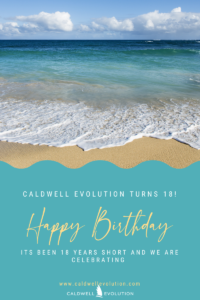
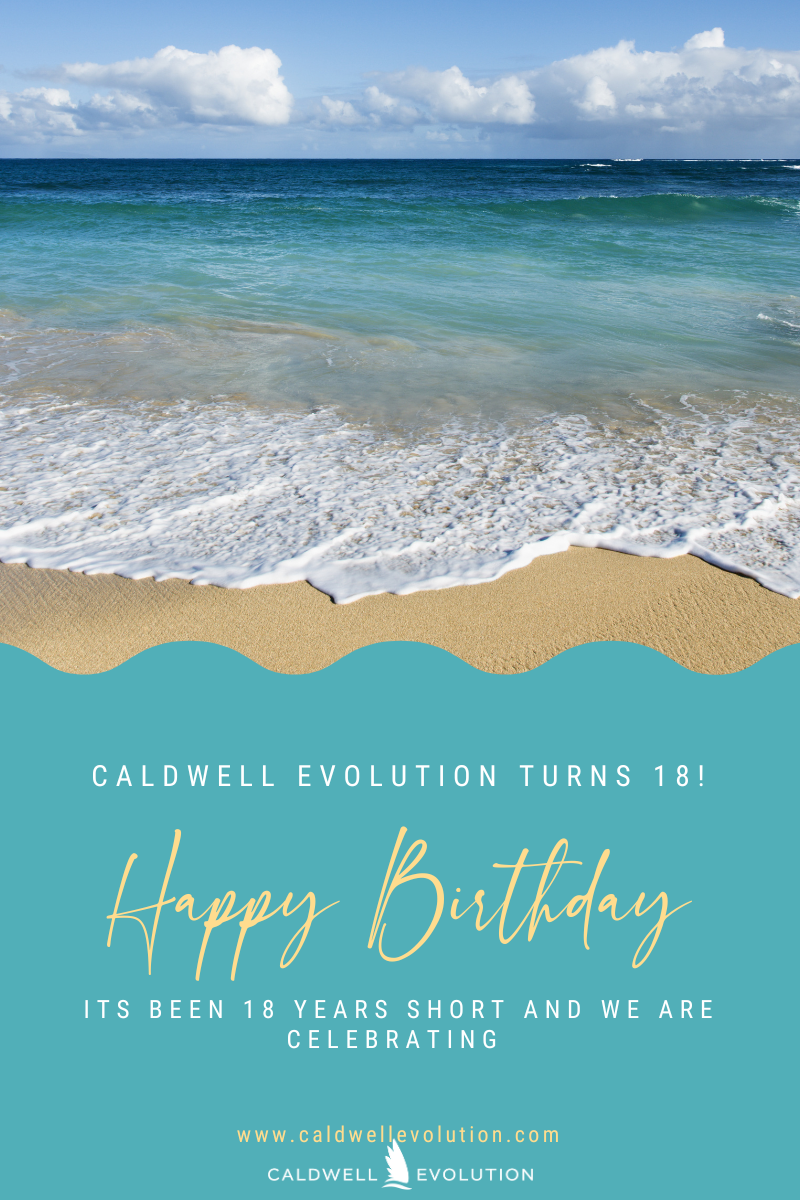
waves on beach, writing happy birthday to Caldwell Evolution

Yearly Planning with Micro Tasks

Posted by Carolyn on
 July 6, 2023
  ·  No Comments

A New Fiscal Yearwaves on beach, writing happy birthday to Caldwell Evolution

July 1 is the beginning of a new fiscal year for Caldwell Evolution and yearly planning is on the calendar. Micro tasks have come to my rescue again. Yearly planning can be fun, however it can also be overwhelming. Using micro tasks and a dedicated planning process, I was able to get through the process, and get excited for the year, without feelings of overwhelm bogging me down. The process I use is very effective and when paired with micro task strategy, it also be very powerful.

The Yearly Planning Process

The yearly planning process for me involves a review of goals and achievements from the past year, analysis of what worked and what didn’t, setting goals for the following year and some KPI’s (key performance indicators) to go with them. The process I use comes from a coaching program in which I invested during the covid-19 pandemic. I learned a 3 step process from Fabienne Fredrickson, founder of Boldheart.

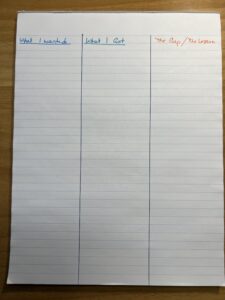
The process works well if documented on a three column table. Take a piece of paper and divide into three vertical columns. At the top of column one write the title “What I Wanted”. For column two write “What I Got”. Finally, at the top of column three write ‘The Gap, The Lesson”

Step One: What Did YouWant/Desire?Three columns on a piece of white lined paper marked what I wanted, what I got and what is the Gap or Lesson.

Step One is carefully listing what you had wanted for the year. (I am assuming you are also using this for yearly planning. If not, use whatever time frame within which you are planning.) When planning for the previous year, what were you hoping or expecting to attain during the year.  No judgement, just list each item on your table in the first column to the left.

Step Two: What Did You Get?

In the second column, titled “What I Got”, write down beside items in column one what actually happened by the end of the year. Did you expect $100,000 in revenue? What did you actually achieve? Were you hoping to travel to a hot vacation location? Did you travel? Again, no judgement; at this point just write the facts. Column two is the first of two reality checks. Be honest.

Step Three: What is the Gap/What is the Lesson?

In the third column, beside the items in column one and two, write the difference between what you wanted and what you got. In addition, what did you learn from that difference (gap)? What was the lesson? You may have achieved or received more than you wanted or desired. Or you may have achieved less.  In both there is something to be learned about what you did to make it happen or what you did that prevented your goal from being achieved. This is your second reality check. Look at the habits or behaviours or things you did, in other words had control over, that made the desired achievement happen, or not happen. The high performance athletes review this as “How did I control the controllables to set myself up for success?”

Using Micro Tasks

This is where I find the micro tasks most helpful. Writing all that down can get tedious for me. It takes some brain power, thoughtfulness and time. If I am not careful, the process doesn’t actually get finished and I never fully commit to the key performance indicators. By breaking each step down, I completed not only this tedious part of yearly planning, but the entire yearly planning process over the course of a week.  Breaking down into micro tasks meant using really short work sprints.

Micro tasks can be as small as 5 minutes. For this task, I worked in 20-30 minute sprints. Because I had written goals for fiscal year 2023, I simply logged those in column one. That was one task. Column two took a bit more work since I had to review what was actually achieved over the year. That took a couple of time sprints. Finally, column three is more about analysis. Those I tackled one item at a time and gave myself permission to get up and do something else in between items.

With the columns filled, my next task was to identify what I want to achieve in fiscal year 2024, what success would look like and what the key performance indicators would be. Again, I broke the process into small tasks by tackling each desired achievement as a separate task.

The Result

One of the benefits of working with micro tasks is the built in reinforcement the strategy offers. When each task is completed, your brain registers an accomplishment and with it, all the lovely positive chemicals that go with that. Accomplishments don’t have to be huge. They can be small.  Using micro tasks to avoid feelings of overwhelm, creates more accomplishments.

Are we fooling our brains? Maybe, however, sometimes that’s exactly what has to happen to get through a bigger project. Breaking a big project into a series of micro tasks can be a game. Each step completed is worthy of a celebration, check in a task list, high five and a cheer. String together those micro tasks and the project is done.

Yearly planning? Check.

Caldwell Evolution News Mentored for Momentum Coaching Planning Productivity
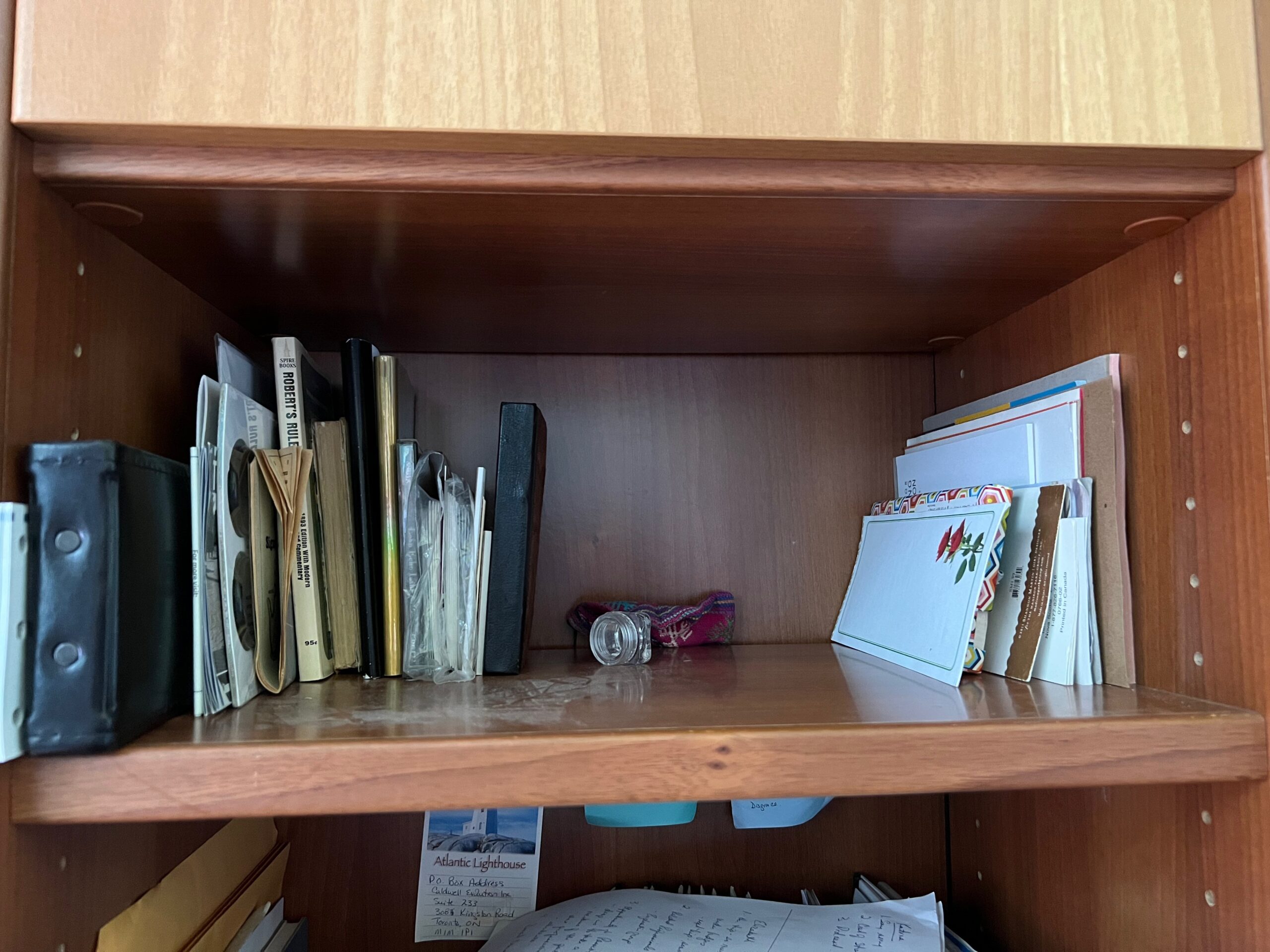
shelf in desk unit half empty

Micro Tasks

Posted by Carolyn on
 June 26, 2023
  ·  No Comments

Micro Tasks Challenge the 15 Minute Declutter Routine

Could it be that micro tasks could be even more successful than a daily 15 minute declutter routine? I say yes; I think they can and that we ought to all jump on this bandwagon. Micro tasks could possibly even replace the 15 minute declutter routine.

How it Startedshelf in desk unit half empty

Mindlessly, I was stared at the shelf beside my desk. I had done so countless times before, while thinking through yet another online tech challenge. I have no recollection of sorting out the tech issue. It was clear there were things on the shelf I had not used in years and was never likely to use. In a split second, I decided to clear the shelf, wipe it off and remove to a donation pile those things I would not use. Like the audio CD for learning Spanish. I no longer have a CD player on my computer or portable device to play it.

In less than 5 minutes I had a clean shelf that was now half empty, a small bag of denotable items and a few items in recycling and garbage. The result of my micro task was a very satisfying declutter. The shelf is half empty, clean and can be used more effectively.

Micro TasksPiles of paper and filed on a desk top.

I soon determined that micro tasks could be done almost anywhere, almost any time. I’ve made a game of it. Just this morning, while waiting on the front door step for my son to load the car before leaving, I clipped back the trailing plants in the planter. The micro task took 5 minutes. Later while waiting for a video clip to upload, I wiped the windows sill, rinsed the stained-glass ornaments, took away the ones I no longer wanted and put everything back. Another 5 minutes.

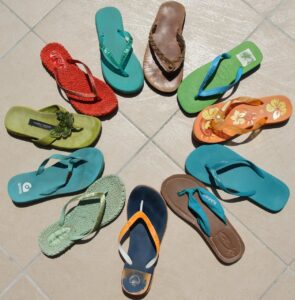
I’ve defined micro task as a 5-10 minute task that can be completed with little or no additional equipment and contributes to clutter free living. Two days ago I took the ski jackets out of the front hall cupboard, inspected for rips and tears and transported to our off-season storage rack in the basement. I’ve got my eye on a shoe rack with 5 pairs of flip flops that haven’t left the rack in awhile – maybe 2 years. While waiting for the kettle to boil, I can scoop up the flip flops, inspect for integrity and bag for donation. This last task makes use of the concept of time layering along with micro tasks.

The Gamebrightly coloured flip flops in a circle all touching toes.

Try it.

  1. Look for 5 minutes either between other projects or activities or while waiting for something else to happen (standing in line)
  2. Look around for a 5 minute task that is super easy to accomplish. For example, while waiting for the pasta water to boil, take the cutlery out of the cutlery tray, wash the tray and replace the cutlery.
  3. Make a game out of finding a micro task that doesn’t require any extra equipment (except maybe a cleaning cloth).
  4. Make sure that the task contributes to either decluttering or getting something done. For example, I filed the top few items on my paper filing pile waiting for yet another video to upload,.
  5. See how many of these you can do in one day.

The Benefit

Five minutes may not seem like alot of time. Those 5 minute tasks, however, all add up. The paper requires filing. The shelf requires decluttering and the flip flops require a new home.  Add all those micro tasks together, all those 5 minute games, and eventually, you have a clutter free house.

Try it, and let me know how it goes.

Declutter Organizing Strategies Productivity
Galley of sailboat

My Favourite Strategy

Posted by Carolyn on
 June 19, 2023
  ·  No Comments

water lines below deck on boat

The Reality

Faced with the magnitude of a project on the weekend, I realized that I refer to my favourite strategy, either productivity and organizing, more often than I realize.

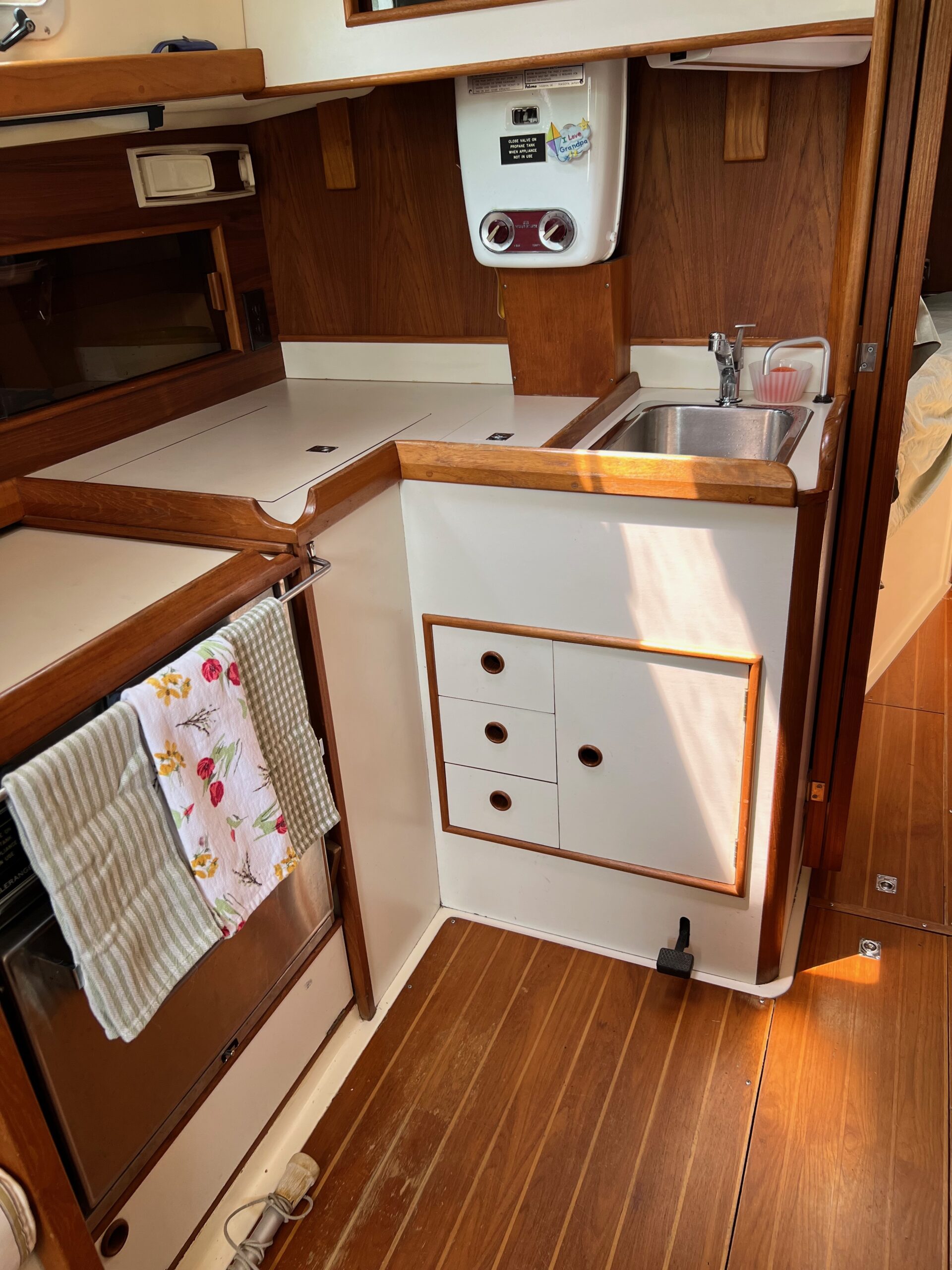
There I was staring into the bilge of my baby. She’s not a big yacht. She is just big enough to require lots of work and weekly, monthly, seasonal and annual maintenance.  You may have heard the expression “a boat is a hole in the water to throw money into”? Yup, that about sums it up. That picture is the water lines in the bilge beside the galley.

In this case it wasn’t the cost of the project, it was how to do the darn thing.  I knew what the end result had to be: tank and lines flushed and filled, inside wiped down with vinegar, dishes and cutlery cleaned, cupboards cleaned out, water filter check, floor washed.

I was struggling with how to get there.  What was the sequence? Why didn’t I write it down last year? Where were last year’s notes anyway? Why couldn’t I just go sailing….?

The Challenge

Frustrated and discouraged, wondering if I ought to have stayed home and worked on my year end finances, I went out to the cockpit. My task list notebook was waiting for me, never far from reach. As I stared at the empty page in my notebook, I thought “this is what my clients maybe feel like before we work together”.

The water system needed to be drained of the potable antifreeze from the winterization. The inside of the boat had to be wiped down with vinegar (my anti mold weapon). The cushions needed airing, other things needed washing. I scribbled away.

The Solution

Break it down. Then break it down again.

This is by far my favourite organizing and productivity strategy. I wrote everything I could think of that needed to be done. Then I did my best to try and sequence the steps.  Some were two person jobs.  I reassessed what I could do alone, and where I needed someone else to help.

Even just seeing the list made me feel better. The tasks seemed more concrete and less overwhleming. The project seemed doable but maybe over two days instead of one. The extra set of hands would have to wait for the second day.

Throughout the day I checked in regularly with the list.  This kept me on task.  Yes, I strike out what is complete. This keeps me motivated and energetic. And if you followed my Instagram account, you know I had to take a break at lunch to reassess progress again.

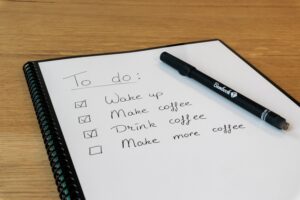
Here’s a peak at the list IMG_3821 after day one.

The ResultGalley of sailboat

Everything got done right down to washing the dishes and setting out the sheets not the berth. Fresh water in the tanks. Filter clean. Fresh dish towel on display – ready to sail and entertain.

My favourite organizing and productivity strategy came through again.

What’s your favourite strategy? Do you have one. Feel free to borrow mine. It works.Forward v berth on sailboat with green linen

Organizing Challenges Organizing Sports Gear Organizing Strategies Productivity
Tags : organizing strategies, productivity
image of valley seen through a crystal ball on a rock ledge

Mindful Reflection

Posted by Carolyn on
 May 29, 2023
  ·  No Comments

image of valley seen through a crystal ball on a rock ledgeWhile mindfulness is designed to create awareness in the moment, mindful reflection gives us an opportunity to develop awareness of the past. That awareness give us the chance to look at something from a distance; to examine it from different angles.  And just maybe, we can see things from a different perspective.


Reflection

I was hunting for photos on Unsplash.com and Pixabay.com, my two favourite royalty free photography sites. My goal was to find a photo to illustrate the notion of paradigm for my Instagram account @caldwell_evolution (shameless plug for more followers). The photo of a crystal ball reflection caught by eye. While it was perfect for Instagram post I was working on, it also made me think of reflection.

Mindfulness instruction schools us to be aware, on purpose, in the moment without judgement. What if we could also be aware, on purpose, of the past without judgement? How is it that through mindfulness we allow ourselves to suspend judgement of our thoughts, habit or behaviours as they are happening and not in reflection? What’s wrong with looking back a little farther and seeing what cold be learned?

Mindfulness and Awareness and Reflection

So I wondered if Mindfulness could be applied to gain awareness and insight into things that had already happened.  Wouldn’t it be great to suspend judgement for things we realize from the past along with the here and now. And like the crystal ball reflection, could we use the reflection to turn things upside down and see them from a different angle.

Perspectivelooking at the upside down reflection through a crystal ball of a beach and water

So much of the productivity coaching I do is supporting clients to see how their perspective may be influencing their ability to move forward on their goals and dreams. A perspective of success, opportunity, positive thinking, excitement and anticipation usually leads to moving forward with the same eagerness. More negative thinking usually leads forward with frustration, failure and limited accomplishment.

Using mindful reflection to look back on a situation, without judgement, help us develop awareness without criticizing ourselves. That lack of judgement makes for a better chance to learn. What if our paradigm needed a shift? Is there a different way to look at the situation? Could turning the picture upside down and give us a different angle? What was there to see?

The Crystal Ball Reflection

Maybe I ought to have titled this post The Crystal Ball reflection. That special reflective dynamic automatically turns things upside down.  What looks the same or different? Does something feel the same or different? What would you do more of? What would you do differently? That awareness without judgement is key to creating meaningful change.

Clarity Mindfully I AM Evolving Coaching Productivity
Tags : awareness, Goals, Leadership, mindfulness, productivity
woman biting pencil staring at computer looking worried and frantic. Procrastinating

Top 5 Series – Indicators you’re Disorganized

Posted by Carolyn on
 May 1, 2023
  ·  No Comments

woman biting pencil staring at computer looking worried and frantic.Think your office might be seriously disorganized?


Not sure if you are disorganized enough to need help?

You have your own business which you love.  It does ok.  Clients are happy – most of the time.  But you admit to yourself when no one else is looking that things aren’t as good as you think they should be. You are really afraid someone besides your accountant and CRA, or IRS is you are south of the 49th parallel, will find out your taxes were late last year….again. The assistant you hired reminded you that the last 10 client orders were late.  Meanwhile, you find yourself running from home to office to home to office, always late and always rushing.

You, and your office or business, may be disorganized and not be aware. Here are the top five indicators I find when clients call me for help.

1 Targets are missed.

This is the indicator that keeps you awake at night. As the fiscal year goes by, and performance targets get missed, you are already sweating. You didn’t meet your sales targets for last year and you don’t even know if you are on track for first quarter.  If fact, you are pretty sure your records aren’t up to date. Do you and your employees have a clear, strategic plan to accomplish those targets? Creating a step by step plan for everyone to follow will help keep everyone on the same page and the business on track.

2 Priorities are confused.

You know your ideal client.  You know your business mission and you have an awesome vision.  Should be enough right?  Then why is it you can’t meet performance goals. Employees don’t understand the mission and/or strategic goals.You have the mission memorized. You’ve agonized over your strategic goals. Every word is perfect. You’ve done the retreat and handed out copies. Why is it then, that no one remembers? Why don’t your employees remember what the company is trying to accomplish this year?

Maybe because words on a page don’t translate into happy customers. A perfect mission, vision and values statement is only helpful if there is an action plan to translate that into the satisfied client. How does you mission statement turn into sales? How does your mission statement become a product or service that removes your client pain point? Turn your attention to providing value to clients and your mission will come alive with sales.

3 Employees are unhappy.

You have a sense that there are just too many good bye lunch parties. Meanwhile you’re soaking up your training and development budget with new hire orientation rather than development of your existing and loyal employees. At the same time, you’ve hearing complaint after complaint from employees about this, that and the other thing. They never bring it up to the team meetings, (do you have them?) they just grumble.

Disorganization in an employer or boss can quickly lead to disgruntled employees. With clear expectations, timely projects and constructive feedback, employees will more likely enjoy making a contribution to your goals.

4 Offices, work spaces are cluttered and disorganized.clutter-free office shows what is possible with organizing support.

Starting with yours; do you, or your staff, keep asking for another copy of (name of latest report on the file share system) because they can’t find it? Do you, or your employees, spend too much time looking for things and not enough time acting on goals? Sure, you know exactly where that proposal is, right? If I said you had 10 seconds to find it, could you? What is under, behind or beside your desk? Your employees desks? Check it out.

Keeping a clutter free work space contribute to higher productivity and happier staff. Try putting aside a Friday afternoon for an office clean up – with everyone responsible for their own work area. Keep common work areas clutter free.

5 Someone is always at the office or online trying to work late – very late.

Someone, or ones, is (are) working longer hours than they should. Is there one person, maybe it’s you, that is always working later than everyone else, comes in on weekends, and probably still is not meeting their performance objectives? That extra work time without the work output to show for it, is a common sign of disorganization. That person may need some help to clarify their priorities and deadlines. Or they may need some support to create a more productive work environment.

My goal is to help you develop an awareness of what some of the indicators of disorganization.  With that awareness, you have the power to make changes. Even small changes can make a big difference.  Become a clutter free role model at your office and to your employees. Keep your work area clutter free. Small changes applied consistently over time amount to big results.

Business Organizing Declutter Office Organizing Productivity Top 5 Series
Tags : challenging disorganization, decluter, Disorganization, office organizing, Top 5 Series

Are you managing Chronic Disorganization?

Posted by Carolyn on
 April 18, 2023
  ·  1 Comment

 What is Chronic Disorganization?books

You many be managing chronic disorganization if you have been disorganized for awhile, tried to fix things and failed and are frustrated you can’t get stuff done in your life. While the term is not a medical diagnosis, it is a very real experience that many people are trying to manage.

Someone who is chronically disorganized has three defining features as identified by Judith Kolberg in Conquering Chronic Disorganization:

  1. They have been disorganized all or most of their adult life;
  2. Being disorganized negatively effects their quality of life in some way everyday; and
  3. Previous attempts to be organized have not been successful.

A significant amount of knowledge and understanding about chronic disorganization has been gained since Judith Kolberg first identified the concept in the early 1990′. The Institute for Challenging Disorganization (ICD) was established later that same decade. It’s mission is specifically to “provide education, research and strategies to benefit people affected by chronic disorganization, and the professionals who work with them.”

Why Am I Chronically Disorganized?

There are many factors associated with chronic disorganization.  This  fact sheet from ICD provides a comprehensive chart of all factors. The most common factor associated with my clients’ inability to get and stay organized is a brain based condition, usually Attention Deficit (Hyperactivity) Disorder.  Most of my clients do not exhibit hyperactivity but do struggle to maintain the correct level of focus for the task at hand. Another common reason is my clients have simply never learned.  Organization may not have been a priority for their parents.  As a result, they have never learned how to organize and don’t have any intuitive skill or talent. In addition, they tend to acquire easily and shed with difficulty.

Is Chronic Disorganization the same as Hoarding?

The simple answer is No, it is not.  Hoarding disorder is a mental health diagnosis.  Individuals with hoarding disorder are a subset of the larger population of individuals managing chronic disorganization. 

What Works?

People managing chronic disorganization do not respond to conventional organizing practices and strategies.  I frequently hear from clients that they have tried all the tricks and tips and still can’t make them work. These individuals think, learn and organize in ways that are unconventional or just more creative.  Their brains don’t think in a typical logical, linear fashion. The solution is to use more creative, innovative organizing solutions that work specifically for the chronically disorganized individual.

Where can I get Help?

purple, orange and green boxes. Institute of challenging disorganization logo.

If this sounds familiar, either to you or someone you know, reach out for help.  ICD has a professional organizer directory which can help you find someone in your area. It is important to work with someone trained in supporting chronic disorganization to ward off further frustration. Some professional organizers such as myself have made a commitment to this area of organizing by achieving the Certified Professional Organizer in Chronic Disorganization credential.  And since I work almost exclusively virtually, I work with clients all over the world.

There is hope.  There is help.  You don’t have to live and work this way.

Declutter Organizing Challenges Productivity
Tags : Accumulation, chronic disorganization, Institute for Challenging Disorganization, professional organizers
Woman holding stones in her hand at beach.

Mindfully, I AM Evolution Coaching

Posted by Carolyn on
 March 8, 2023
  ·  No Comments

Four Steps to Productivity and Organization

With close to twenty years working as a professional organizer and then productivity coach, I saw that the road to success for my clients could be simplified into four steps. Mindfully, I AM Evolution is a four step coaching system. The four steps are simple to learn and easy for clients to coach themselves.

Step 1: Mindful Awareness

Developing mindful awareness of successes and failures is the beginning of the process. I call this becoming aware of the two “T’s”, tripping habits and thriving habits. Tripping habits take us away from our success.  Thriving habits help us get to our success.

We can’t change what we aren’t aware of it. Noticing the habits that cause us to trip, can sometimes lead to self judgement and shame. That’s where Mindfulness comes in.  Mindfulness is defined as being aware, on purpose, in the present moment without judgement. Being aware without judgement is more helpful to simply notice the tripping habit.

Equally important is developing awareness around thriving habits. These are the habits we can use, and rely on, to support our efforts to change those tripping habits and turn them into behaviour that points in the direction of our Intention.

2: Intention – Clarity

Most people think of intention as setting a goal.  In Mindfully, I AM Evolution, the I refers to Intention as who you want to be when your are your very best self.  Not only who you want to be, but who do you need to become. Intention is about becoming the very best version of ourselves when we lead a life as our truest self.

I hear from my clients “I want to show up on time.  I am so tired of always being late.” Another common intention is “I want to actually get to the gym and eat better and look after myself to be healthier.” If this is you, who do you need to become in order  to actually be that person you want to be? Identifying your Intention give you Clarity.

Step 3: Attention – Strategy

Once you have identified your intention, the third step is recognizing where you would have to put your Attention, in order to become that person. Notice I didn’t say focus or discipline.  In my experience these two words are triggering for many people.  People who struggle to manage chronic disorganization or time challenges become immune to the constant direction to be “more focussed” or “more disciplined”.

Attention is about energy.  It’s much easier to determine where to put the energy of your attention, once you know how you want to show up. The real you that you are striving to be.  The you that show’s up on time, develops healthy lifestyle habits or produces reports on time. Where do you need to direct you energy to ensure your business success? Knowing where to put you Attention identifies your Strategy.

Step 4: Mindset – Action

The fourth and final step in the process is Mindset. What do you need to understand, know and believe in order to successfully take the Action.

Action is the antidote to fear and the generator of energy.  Action moves us closer to accomplishment and success with our dreams and goals.  Without it, nothing happens.

With a can do Mindset, there isn’t any action. With a Mindset that there is no failure, just as many attempts as necessary to create success, accomplishment is guaranteed.

This is often the hardest of the four steps for clients and for all of us. It’s hard to get past fear of failure or being ridiculed. However, moving beyond your comfort zone is where all the magic happens.

Your Turn

Try using these four steps to move yourself forward on something you’d like to accomplish. Let me know in the comments about your success.

Clarity Mindfully I AM Evolving Coaching Productivity

Mastering Clutterfree Living Step 3: Take Action

Posted by Carolyn on
 May 31, 2022
  ·  No Comments

Step Three: Take Action

Take action is Step Three in mastering clutter free living.  It is also the most important and often the hardest.  Taking action is often where we stumble.

Background: Steps One and Two

Let’s start by reviewing Steps One and Two.  Step One is to Get Clarity.  Without a clear idea of what you want to do or where you want to go, it is hard to figure out how to get there. In fact, it could be impossible. Imagine trying to find a book in a room that you’ve never been in before, with no light.  Yup, darn near impossible.

Step Two, is Create a Strategy.  When you know where you are going or what you want to accomplish, it is much easier to create a strategy that will get you there.  Create a plan including the stepping stones or steps that you will take to get to your accomplishment.

The Challenge

Why is it that so many of us stumble when it comes to taking action? I have seen this time and time again with clients.  And let’s be real: I am my best client in this area.  I too have often struggled and stumbled when it comes to taking action.  What’s the big deal?  Why do we have so much trouble.

Often the answer lies in our Mindset. “Whether you think you can or you think you can’t — you are right”, Henry Ford. This oft-quoted phrase holds the secret to our challenge. If you believe you will not be successful, it may be almost impossible to tackle even the simplest of first steps. Conversely, if you think you will be successful, you may be jumping into action as soon as possible.

Toy red train with 3 blue cars chugging up a hill saying "I know I can, I know I can".

Mindset can make the difference.

If you think your Mindset is holding you back from taking action, here are some self-coaching questions that may be helpful in getting from frustrated to fantastically successful.

  1. What is the conversation in your mind when you think about taking action on your goal or desired achievement?
  2.  What would need to be the different conversation in order to be successful?
  3. How do you need to show up in your life, or in your project, in order to take action?
  4. Who do you need to be in order to take action?
  5. What would you do if you knew you couldn’t fail?
  6. What would be different if you considered this challenge simply an experiment? No wins or losses, just an experiment to see what happens. If you don’t like the outcome, you can always change to another experiment or change a variable.

Setting yourself up with an I will be successful mindset can often fend off the stumbles and ensure that your desired achievement, becomes a reality.


Action Mindfully I AM Evolving Coaching Productivity
question mark on pick background

Getting Clarity on What to Do

Posted by Carolyn on
 March 17, 2022
  ·  No Comments

What you do is infinitely more important than how you do it. Efficiency is still important, but it is useless unless applied to the right things.

Tim Ferris, The 4-Hour Work Week

People affected by disorganization often complain they don’t know what to do. This breaks down into what I call the BIG WHAT and the LITTLE WHAT. Big or little, if you don’t know where you are going, it is almost impossible to get there.

The Big WhatList of things to do on white paper with black pen.

The Big What refers to life purpose, larger goals, or one’s mission in life. Each of us has various domains of interest, activity and priority in our lives.  For example, career/vocation, family, relationships, spirituality, health/fitness and financial are all domains or components of our lives.  Different authors identify and separate these life components differently, however the basic premise is the same. How important each domain is to an individual, how much time, energy, and other resources they will commit, varies according to the season of our life. When the components are imbalanced, an individual may feel unproductive. When someone says “I don’t know what to do”, and they mean they don’t know how to prioritize their limited free time, they are talking about the Big What.

Clarifying the Big What requires having a vision for your life. Do you have a sense of who you are are what your values are?  Do you know what your priorities are?  How do you want to show up in this world?

Behind the Big What is why we do what we do; our values determine our Why. The Japanese call this the Ikigai, the reason to get out of bed in the morning. Gay Hendricks calls it working in our Zone of Genius.   Do you exercise because health is important? Did you buy a bike to spend time with your children and get some exercise?  Do you work in a book store because reading is your passion?

Having a clear understanding of your Why will help you get to your vision, or life goals, even when the going gets tough. Creating a vision board or mind movie are tools may people use to help clients clarify and remember their goals and values. If you are really struggling with some existential questions (get married or not) you may need the support from a professional such as a minister, rabbi, life coach or similar individual trained in guiding clients through the larger existential issues of life.

The Little What

The Little What refers to either a process or daily tasks. It more often has to do with technical competence in a task or project or sequencing the steps. The output will be concrete.

Have you set clear goals? Are the goals written down? Written goals are more likely to become a reality. Are the goals meaningful and relating to the overall vision for their life or, at least one domain of it? Can you identify exactly what the output of your project looks like? SMART goals, (Specific, Measurable, Attainable, Realistic, Time Limited) are still one of the best ways to identify one’s Little What.

If you really struggle with disorganization, you may require additional support to identify clearly, succinctly, and specifically what you want the result of a process to look like. This clarity often makes the steps to get there also more visible. With a clear destination, choosing a path becomes more tangible and therefore, more attainable. Creative visualization or employing a theme might also clarify lower and higher priorities.


Clarity Mindfully I AM Evolving Coaching Productivity
← Previous Page
Next Page →

Banish those procrastination gremlins!

Conquer Procrastination Cheat Sheet

Struggling with procrastination gremlins? Grab your free copy of Conquering Procrastination Cheat Sheet: 4 Procrastination Gremlins and the Tricks to Beat Them.

This field is for validation purposes and should be left unchanged.
Name(Required)
Caldwell Evolution | Copyright © 2026 All Rights Reserved
Website by Janet Barclay