Caldwell Evolution
  • Home
  • Organizing Services
  • Coaching
    • Evolved Momentum – Productivity Coaching
    • Evolved Momentum – Business Coaching
  • Courses
  • Blog
  • About
  • Contact

Archive for Mindfully I AM Evolving Coaching

a journal, pen and coffee cup with coffee on an outdoor wood table in the sunshine Graphic of GRWM planning 2026 demonstrating the intention to plan the year.

GRWM: Planning for 2026

Posted by Carolyn on
 December 29, 2025
  ·  6 Comments

a journal, pen and coffee cup with coffee on an outdoor wood table in the sunshine Graphic of GRWM planning 2026 demonstrating the intention to plan the year.It’s planning season and time to plan for 2026 as the New Year looms on the horizon.

I’ve identified four steps to the planning process. While I primarily teach this as a business planning tool, it can be used for planning out any set of goals or dreams you might have. Loosing weight? Landscaping a yard? These for steps apply just as well.  Here we go.

Stepping Out – of your comfort zone

This first step has two parts each with its own function. Both require stepping out of your comfort zone and both will help with planning for 2026.

Part One

The process begins with a review of the previous year. This review not only helps to identify successes and challenges from the previous year, but all provides a stable platform from which to move forward.

Start by taking a piece of paper and dividing it into three columns. Title the first column “What I Wanted” and write down in this column the goals and achievements that you wanted for 2025. The second column is titled “What I Got”. In this column, beside the list of what you wanted, write down what you actually got. You may have achieved your goals or you may have supercharged them. Some of you may be disappointed with the results of some of your goals. Suspend judgement in this exercise and simply write the truth as you see it.

The third column is titled “How did I Contribute to this Result?”. What hard things did you do? Where did you hold back and play small? Here is the out of the comfort zone space for you. Suspend judgement and simply review and acknowledge what you wanted, what you got and how you contributed to the outcome, both positive and negative.

My clients often find this to be a very revealing exercise. In some cases, things didn’t happen because they simply failed to continue as a priority. In other cases, things happened because they worked consistently in the direction of their goals. Recognizing how we contribute to success provides us with tools to move forward into planning 2026.

There may be things you choose to leave behind in 2025. Not everything undone needs to move forward. Leave behind what no longer serves your purposes.

You now have a stable platform from which to work moving forward.

Part Twowhite coffee cup that says begin, sometimes this is the hardest part of decluttering or planning

The second part is a visioning exercise.  I call it the view from the top of the mountain. Other coaches have different names for it but the process is the same. Some call it magic wand thinking!

Close your eyes and imagine yourself one year from now at the close of 2026. What goals have you achieved. What are you doing? Who is with your? How are you feeling? What can you do now that your goals have been achieved? What else did you accomplish? Imagine the tastes, smells, sights, sounds that are all around you now that you have accomplished your goals. Make this vision as vibrant and as detailed as possible.

The world of high performance sport and the research in neuroscience that has followed, has revealed that your brain can’t tell the difference between what you imagined you did and what you actually did. If you imagine yourself getting up and running 5 am each morning for 28 days straight, then when you actually do get up at 5 am and go running, your brain is convinced this is something it has done before. Rather than feeling fear or conflict, if feels familiarity and comfort.

Once you are really clear on what the end of 2026 looks, feels, tastes, smells like, turn around and look back towards the beginning of the year. Look at the path that has brought you to the top of the mountain. What did you accomplish and when? What did you do halfway through the year? A quarter of the way? Three- quarters of the way?

person's feet in black running shoes taking step on stairs. Showing the idea of stepping up.

Stepping Up – to identify the work that needs to be done

This second step requires stepping up to the real work that would need to be done if you are to accomplish your goals. Pull out a calendar. When would the work happen? What else do you have on your plate? Do you have other commitments that might impede your progress? What things might you have to let go? Stepping up includes creating a financial plan for your goals. Match up your financial resources with your calendar so that the funds you need are available when you need them. If you are planning for your business, map out what income and expenses will happen in each month.

Stepping In – to create a plan

calendar open to days of week with blue and orange marker sitting on top, organized time and planning

The third step is where the detailed planning takes place. While its title is “Stepping In”, I like to think of it as “leaning into” the work.  In the Twelve Week Year, Moran and Lennington identify that most people work best with 90-day deadlines. Conveniently that creates three-month time frames. With a clear and detailed vision in your mind for the end of the year, what will you have accomplished at the 3, 6, 9 month markers of the year? Create a detailed plan for the first 90 days. Each subsequent 90 day block is less detailed. You will have a chance to review and revise at the end of each 90 day block for the next three months.

Stepping Through – the gremlins that stand in our way and try and pull us down

woman in brown sweater and scarf sitting on log an looking out over body of water. Showing quiet and thoughtfulness

While planning for 2026 to be successful is essential, equally important is to planning for the gremlins. They will show up. I’ve identified four key gremlins that tend to show up consistently for my clients. They include Fear of Criticism, Fear of Failure, Dislike of a Task, and Impatience. I’ve created a cheat sheet with tricks to conquer all four of the gremlins. Click here for your free copy.

Planning for 2026 success will include a plan for the gremlins. Put this in place a head of time and you are armed for when they show up. You won’t be surprised – you will be prepared. Preparation matched with planning leads to success.


 

Mindfully I AM Evolving Coaching Planning
Tags : Goals, Planning, Procrastination
Your brain uses neuroplasticity to create new neuropathways that can be associated with new habits and beliefs.

Rewire Your Brain to Get Organized: Neuroplasticity in Action

Posted by Carolyn on
 October 21, 2025
  ·  1 Comment

Mindfulness allow us to notice habits generated through subconscious thoughts and beliefs. Once noticed, neuroplastiity allows us to change our behaviour.Have you ever wished you could just be more organized without feeling like it’s a constant struggle? The good news: your brain is capable of change. By leveraging neuroplasticity, you can make organization an easier, more natural habit.

Neuroplasticity is your brain’s ability to reorganize itself by forming new neural connections throughout life. This doesn’t just help with memory or learning a new skill.  It also allows you to retrain your habits, including how you approach organization. A recent InsideHook article notes, London taxi drivers’ brains grew in the hippocampus over years of navigating the city’s streets, showing that consistent practice changes the brain structurally.

What is Neuroplasticity and Why Does it Matter?

Neuroplasticity is the brain’s remarkable ability to rewire itself by forming new neural connections throughout life. This doesn’t just help you memorize a new skill or learn a language—it allows you to retrain habits that may have seemed “hardwired,” including how you handle clutter, manage tasks, or maintain systems in your business. Studies show that consistent practice can physically change the structure of the brain. For example, London taxi drivers develop a larger hippocampus over years of navigating complex streets, illustrating that sustained mental effort leads to measurable brain growth.

The late Dr. James Doty, previously a clinical professor of neurosurgery at Stanford University and founder of the Center for Compassion and Altruism Research and Education, extensively studied how our minds can influence our reality. In his book Mind Magic: The Neuroscience of Manifestation and How It Changes Everything, Doty explained how practices like attention, meditation, visualization, and compassion can change our brain structures, allowing us to move through the world in ways that help us see clearly and realize our dreams.

Whether you’re trying to clear the clutter from your home, streamline your workflow, or get consistent with marketing tasks, understanding how your brain forms habits gives you a roadmap to success.

Here’s how you can harness these principles in your daily life:

1. Neuroplasticity and Mindfulness: Awareness is the First Step

Before you can change a habit, or the beliefs ingrained into your subconscious, you have to notice it. You have to be aware that the beliefs exist. Mindfulness allows you to become aware of routines that come from subconscious thought patterns or beliefs.  Although the book is listed as a biography, the late Dr. James Doty’s landmark book Into the Magic Shop outlines clearly both the mindfulness strategies for changing beliefs and the neuroscience behind it. For example, do you automatically pile items instead of putting them away? Do you avoiding starting a project because you are afraid it won’t be perfect? Do you avoid making yourself and your business visible because you are afraid you might fail – or be successful? By noticing these habits without judgment, you create a window for neuroplastic change. Mindful awareness is your first step toward rewiring your brain to support great organization of your home, office, to-do list or business activities.

Woman with headphones looking at phone while sitting and patting dog showing a calm, organized life2. Neuroplasticity and Fun: Everyday Challenges and Novelty

Your brain thrives on novelty and challenge. Everyday activities that stretch your mind — from solving puzzles to taking a new route on your walk — stimulate neuroplasticity. Traveling is a perfect example: navigating unfamiliar places forces your brain to adapt to new patterns, strengthening memory and problem-solving pathways. You don’t need a plane ticket to reap the benefits.  Small changes in your daily routine, like changing your walking or driving route, engage your brain in the same way. Experiment with a digital app to use it differently. Change the time of routine activities in your day. Or simply, change how and where you eat lunch.

3. Locking in Neuroplasticity: Emotion, Interest, and Positive Associations

Our brains learn most effectively when experiences are tied to emotion, interest, or pleasure. Music, for instance, can prime your brain to form stronger connections.  This is why pairing tasks with enjoyable stimuli makes new habits stick. Linking desired behaviors, like putting items away immediately or scheduling your day intentionally, with positive feelings makes them more likely to enter your subconscious and become automatic over time. Music, smell, taste are all senses that generate emotional responses based on previous experiences. These can be tied to activity to help you build new neuropathways and therefore habit. For example, play a favourite group of songs from a very happy time in your life to create an upbeat mood while you are sorting clothes. Drinking your favourite tea or coffee while working on a project can have the same impact.

Putting It All Together: 3 Tips to Apply These Strategies

  1. Be Mindful of Small Habits: Pause before you act and notice what your brain is doing automatically. Catch the “default” behaviors and replace them with intentional ones.

  2. Add Novelty to Routine Tasks: Change your environment, rearrange spaces, or try new methods for tasks you usually do on autopilot — this challenges your brain and strengthens new neural pathways.

  3. Pair Tasks with Positive Stimuli: Listen to music you enjoy, light a favorite candle, or give yourself a mini reward while practicing new organizational, productivity or marketing activities. Emotion strengthens memory and habit formation.

By incorporating mindfulness, novelty, and positive associations, you’re not just organizing your environment — you’re training your brain to support the behaviors you want, making organization feel more natural and less of a chore. The more you practice, the easier it becomes, and the more your brain rewards you with clarity, focus, and confidence.

Mindfully I AM Evolving Coaching Mindfulness Organizing Strategies Productivity
Celebrating a successful organizing project with a client

Celebrating 20 Years

Posted by Carolyn on
 September 18, 2025
  ·  No Comments

Carolyn Caldwell is a certified professional organizerCelebrating 20 Years: And 3 Lessons I’ve Learned
In the summer of 2025, Caldwell Evolution Inc, previously Wellrich Organizers, is celebrating 20 years in business.   The time passed quickly; I achieved credentials, helped hundred of clients get  – and stay – organized,  coached, mentored and created courses. It has been quite a ride.

Meanwhile, how things have changed. In July 2005 I had no idea  that the world would revert to an online focus, my business would follow, that AI would become a household name or that I would develop a fascination with marketing and neuroscience.

Carolyn Caldwell has 20 years experience as a solopreneur and now offers Evolving with Momentum business coaching.


3 Lessons I’ve Learned

While I love to take course, read and study, I’ve learned 3 lessons while running a business as a solopreneur in the organizing and productivity industry. While I celebrate 20 years in business, I also celebrate significant lessons I have learned along the way.

1. Staying current keeps us engaged, healthier and happier.

To stay engaged and involved one must stay up-to-date. Digital communications relay information around the world in fractions of seconds and give us access to information on how to stay engaged and involved. Listen to The Mel Robbins Podcast, and you’ll learn that staying active (sweat, lift, balance), ditching the cell phone and maintaining a healthy social life are keep to staying healthier and happier for longer.

Over on the social platforms, I’ve found other fascinating information, much of which I integrate into my client work. Take Emilie Leyes, for example, a young brain training specialist and hypnotherapist. Her work has given me several tools to support clients through sorting and developing new habits. As someone who has developed an entire coaching model around mindset and habits, these are very important tools for my coaching toolkit. She is one of several professionals working with brain science whom I follow and study. Another is the late Dr. James Doty, author of Mind Magic. Dr. Doty is famous for explaining, in easy-to-understand terms, the neuroscience behind manifestation.

As my fascination with the science of marketing grew, so did my curiosity and quest to find the leaders in online marketing to inform my work. Enter Amy Porterfield, course creator extraordinaire and online marketing maven. Add in a dose of Seth Godin, author of Seths Blog and 22 best selling books on marketing and business.

A bonus lesson? Carefully, regularly and thoughtfully curate your online content. That alone will keep you healthier, longer.

2. Our businesses change regularly and consistently

Mine has. If you have a business yours will too. I may be celebrating 20 years of business however that business was evolved significantly. I started as a professional organizer and soon found my client list mostly those with a hoarding disorder or behaviour diagnosis. With the addition of coaching skills my business evolved to include mostly clients with ADHD. By 2010 I had added business mentoring, my first course (Kickstarting Your Organizing Business) and by 2020 business coaching.

What all my clients have in common is they are all disorganized. Whether in their home with stuff, their time with tasks and to-do lists or their business, getting organized without frustration and overwhelm is the common pain point. Today I coach new service-based solopreneurs in the set up of their social platforms to be visible so their clients can find them. I coach neurodivergent, fascinating individuals with ADHD to get stuff done and get on with their dreams and goals. And occasionally, I still help people manage their physical stuff. Nowadays, that mostly happens through virtual organizing.

3. People can, and will, change.

This has been the most interesting lesson of all. Did you know we can change our brains? Or that we can use our thoughts and our actions to rewire our brains to get a different result in our lives. Yup. Just ask any brain-training specialist. People can build new habits – and – ditch the hold, not-so-helpful ones at the same time. Using the principles of neuroscience and brain training, we can carve new neuropathways to help us “manifest” our desires, create new habits, learn new skills and move our lives in the direction of our goals and dreams.  That is my goal for my clients – to manifest their goals.

The past 20 years has been fun, interesting and challenging. I have evolved along with my business. When I rebranded in 2015 to Caldwell Evolution Inc., I didn’t realize how prophetic that name would turn out to be. Let’s see what the next 20 years brings.

Caldwell Evolution News Mentored for Momentum Coaching Mindfully I AM Evolving Coaching
Tags : business coach, Caldwell Evolution Inc., Carolyn Caldwell, celebrations, productivity coach, professional organizers
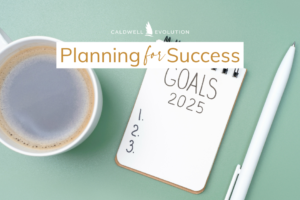
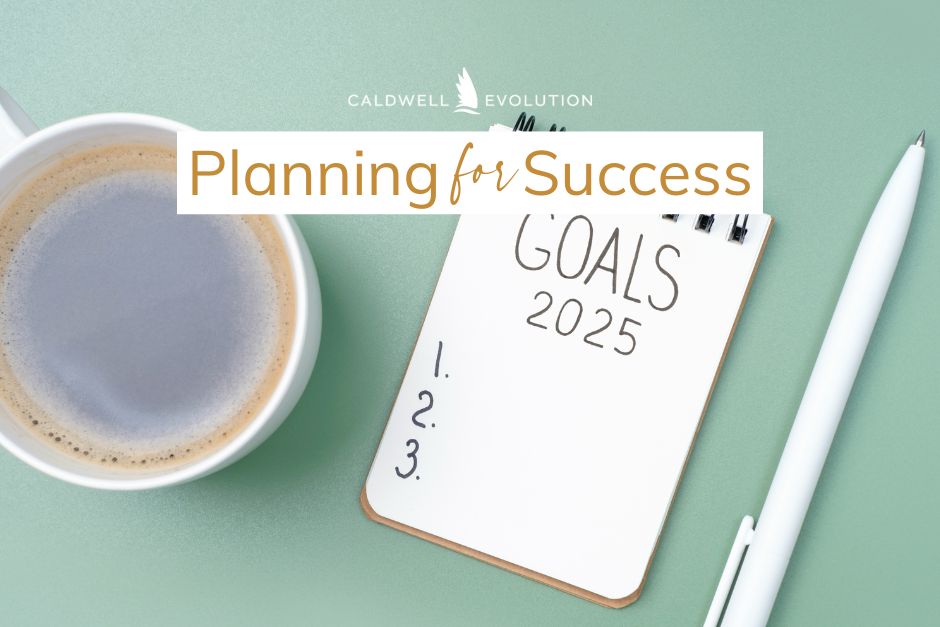
full coffee cup, note book with goals 2025 written and 1, 2, 3 plus white pen on green background

Planning for Success and the Dichotomy of Control

Posted by Carolyn on
 January 7, 2025
  ·  No Comments

full coffee cup, note book with goals 2025 written and 1, 2, 3 plus white pen on green background showing planningIs there any point in planning for success or for the year ahead?
For those of us in the productivity and organizing field the answer is very simple.

Yes. If you plan your work, activities, schedule, career, day or anything for that matter, you are far more likely to be available when opportunity appears.  I’ve blogged before about the planning and luck relationship. However, you are also more likely to be equipped to respond to adversity when it show up.

But sometime external circumstances can make planning feel futile. What about the uncertainty of the world we live in today as 2025  greets us? What about the political turmoil around the world we read about every day? Add to that the economic uncertainty that both those situations create and planning feels like a lost cause.

The Dichotomy of Control

It is true that most of us don’t have any control over what is happening politically on the other side of the world. While we may have reason to worry and be concerned about it, we don’t have any control over it.

However, the dichotomy of control reminds us that there are many things over which we DO have control. The concept is a very old one dating from the Roman Stoic Epictetus. According to the Stoics, there were really only two things we had direct control over. They are our actions and what or how we think about things. The past, what other people think or do, and even our bodily sensations (versus voluntary actions) are in fact outside our control.

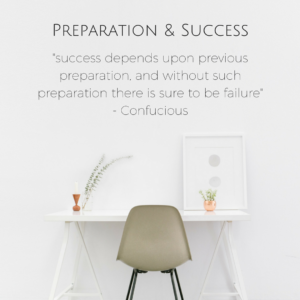
grey desk chair in from to small white desk with the title "Preparation & Success" and Confucius quote "success depends upon previous preparation and without such preparation there is sure to be failure"Planning and Control

It is the things within our control that we can use to plan for success. There are four steps needed to create a plan for the year and they all include elements within our control.

Step 1

Step OUTSIDE of our comfort zone. This is where learning and expansion occurs. This is where were take a risk to create a new lead magnet, try a new exercise routine or commit to an accountability partner. Actions here include creation of a vision and overall goals for the year.

Step 2

Step UP to figure out the real work. What actually needs to be done to accomplish your goal? Who would you need to become to make it a reality?  Actions here might include figuring out how many days a week you can work or work out. Do you have the time to train for a marathon and support for the rest of your life while you are training?

Step 3

Step IN to create a map or menu of actions to turn your vision into a reality. What are the outcome goals for each quarter, month and week that you would have to attain? Outcome goals are the markers along our path that tell us whether or not we are heading in the direction of our larger vision. What are the process goals – the specific actions you would take – to accomplish those outcome goals? If you are looking for 1000 followers on YouTube for your business, how often do you need to post to get that result? How big a calorie deficit do you need, and how will you ensure that happens, to lose that 10 lbs?

Step 4

Step THROUGH the fog that gremlins of self doubt, fear, procrastination create when they show up. What tools that you can access easily, consistently and quickly when you are discouraged frustrated or putting off trying to post that lead magnet?

woman raising arms in success at tope of hill. both the journey and destination are important.Planning for Success

The Stoics believe “We need to focus on “controlling the controllables” and cultivate an attitude of detachment from everything else”. When we focus on what we can control, which includes all four steps of the planning process, we set ourselves up for success. This focus together with equipping ourselves with strategies and tactics to manage our response to those things outside of our control, is planning for success.

Mentored for Momentum Coaching Mindfully I AM Evolving Coaching Planning
Tags : Planning
woman sitting in field looking upward as if thoughtful.

Learning Through Awareness: Does it Work?

Posted by Carolyn on
 November 1, 2024
  ·  No Comments

woman sitting on heels on a dock beside a quiet body of water with eyes closed - as if meditatingIs self-awareness a useful teaching tool? By being more mindful can were learn new skills or habits through awareness?

It may sound simple but I say we can. In fact, I believe that learning through awareness is one of the most powerful tools we can use to change behaviour and  develop new habits.

The Issue: A Lack of Awareness

Virtual organizing has underlined for the organizing industry the importance of recognizing unconscious behaviour in our clients. We all develop habits – subconscious behaviours that we regularly repeat based on the same stimuli. Often, we don’t even realize we do them. Drivers sometimes report driving home and not even remembering the drive because they were preoccupied other thoughts. Meanwhile, their subconscious brain made all the decisions necessary to drive to home while their conscious thoughts were preoccupied.

When the subconscious brain is engaged, we often aren’t even noticing what we are doing. When was the last time you thought about tying a shoe lace, taking a shower or brushing. your teeth. Our dentists might like us all to be more aware during that latter exercise to be more thorough. Many people say they do their best thinking in the shower. Why not? For most adults the shower process is habitual, something the subconscious mind takes care of. That leaves the conscious mind to tackle the next scheduling or budgeting challenge in your day.

But what about when those habits are not helpful and we don’t realize the habit exists or the impact of our behaviour. This is where a professional organizer and productivity coach, becomes the detective. I pull out my figurative magnifying glass and look for subconscious behaviour that undermines goal completion, leaves clutter on horizontal surfaces and results in procrastination.

The Challenge: It’s Subconsciouswoman with back to camera sitting on yoga mat beside a body of water on a beach.

TT, a client who recently engaged my assistance for a move, previously lived in a very small, junior 1 bedroom apartment. I helped her move to a more spacious unit where she could set up her small business office in a corner of the living room. In the previous unit, TT would have to stand up with her laptop, cross the room, balance the computer on a bookshelf, connect the cable to the printer and hit the return key to print an item. The unit was just too small to have the printer closer to the computer. In the new unit the printer cable and printer were right beside TT’s right arm. What happened the first time TT went to print an item? She found herself picking up the computer and walking to the other side of the room. Her subconscious brain still working on the assumption the printer was across the room.

When I pointed out to TT what she had done, we both had a good chuckle and then got to work using the principles of neuroplasticity to lay down a new neuropathway. The new pathway was that TT would turn to the right, pick up the printer cable, plug it into her laptop and print whatever was required.

The Solution: Develop Awarenesswoman sitting in field looking upward as if thoughtful.

TT’s awareness of her habit allowed her to develop a new habit.

When one becomes aware, they can change their behaviour. This is where the learning through awareness comes in. With a conscious effort to be more mindful, one can become aware of any habit that is undermining goal achievement. I call these tripping habits. We can learn to change those tripping habits when we are aware that  we are doing them.

The How: Become Mindful

How can you learn to change your tripping habits through awareness? By becoming more mindful. Do some research on your own behaviour simply by consciously noticing what you are doing.

For example, if you are constantly loosing your car keys and delayed each morning trying to find them, become mindful, and more aware, of what you do with your keys when you walk in the door each day. Do you drop them in a coat? In a purse? On a horizontal surface? Maybe your hands are often full so you subconsciously drop them anywhere to free up your hands. Once you know what you are doing, you can retrain your brain to subconsciously do something else with the keys (like drop them in a bowl or on a hook) so that they are always present.

Use an experimental approach; don’t be too attached to the outcome simply notice what you are doing. Once you know what the unconscious behaviour is, you have the power to change it for one that gives you behaviour you do want.

Awareness is a simple, inexpensive tool that we all possess that can help us learn. It can show us why we are chronically late, always early or habitually loosing our keys. And because it shows us our own behaviour, which we have the power to change, it can be a powerful learning tool.

Habits Mindfully I AM Evolving Coaching Mindfulness Organizing Strategies
Tags : awareness, habits, mindfulness, productivity
orange/red full moon over leaves of forest or garden

Summer Solstice and Full Moon

Posted by Carolyn on
 July 8, 2024
  ·  No Comments

orange/red full moon over leaves of forest or gardenWith both the Summer Solstice and a Full Moon, the last weeks of spring promise renewal. The beginning of summer is a time for Mother Nature to bring rebirth to her garden.Try these three easy tips to help you take advantage of that renewal energy.


Evaluating Before Summer

Tip 1

For some people, the Summer Solstice marks the midpoint of the calendar year. This is an excellent time to reflect on what’s working, what’s not and how far have you come to the goals to which you strive for the year.

For others, the end of June marks the close of a fiscal year end. Evaluating what has worked and what has not for your business will help set you up for success during the next fiscal year.

hands cupped as in a bowl, holding ripe, red strawberries

Setting Intentions

Tip 2

This is a great time to set an intention for your own renewal. What do you bring to this auspicious time of year – the transition from spring into summer? What would you like to accomplish while the weather is warm, the days are long and the garden is plentiful?  For the jam makers and berry lovers, in the northern hemisphere Summer Solstice and the Strawberry Full Moon heralds the ripening of strawberries. For many this reminds them that eating fresh from the garden is often still available via farmers markets and self pick market gardens.

Tracking Intentions

Tip 3

two hands, right hand writing in goal tracking journalTracking your progress on intentions is equally important to setting them. We are often so grateful for a relaxed summer atmosphere that we forget we had intentions for healthier eating, more exercise, increased sales calls – or whatever your mid calendar goals might be. Setting up a weekly tracking system will help you stay on track. Is weekly too often? No. Tracking in small increments makes it easier to keep track and stay on track. It helps to keep your goals top of mind from week to week so that success is more likely. And if things are working to head you in the direction of your goals, it is easier to make a shift, tweak or full pivot to the right direction.

Summer Solstice and the Strawberry full moon provide an excellent opportunity for a check-in, have way through the year. Use these three tips of reflection, setting intentions and tracking progress to get and keep you on track. Make this year your best ever.

Gratitude Habits Mindfully I AM Evolving Coaching Organizing Strategies Planning Productivity
Carolyn Caldwell helming a sailboat to show online courses can get you moving in the right direction.

Who is Carolyn Caldwell?

Posted by Carolyn on
 February 29, 2024
  ·  No Comments

Carolyn Caldwell at the helm of a sailboatWho is Carolyn Caldwell? It seemed like a simple enough request. In a recent content coaching session. Leigh Fowler, pointed out that I had not introduced myself to my followers in a very long time. If ever.

Hmmmm….well that got me thinking.

I started my organizing business in 2005. This coming July I will celebrate 19 years in business. Much has changed in 19 years with the world around me, in my business and in me. My client base has changed as my business focus as evolved and my skill set has developed.

So here goes – a reintroduction of Carolyn Caldwell.

Who was I before my entry into the organizing industry?

My original career was in healthcare where I trained as a nurse. Then there was a stint working in Bella Coola on the northwest coast of Canada then overseas with CUSO in Kimadan, Papua New Guinea.

Dr. Caldwell and Nurse Caldwell on pathway outside health centre Papua New Guinea.

When Dad (Dr. Caldwell) and Mom came to visit Kimadan, Papua New Guinea.

In PNG I supervised two rural health centres and was responsible for connection with ten outpost first aid stations.

I was 25 years old when I arrived, 27 when I left and aged a few decades while there. It was challenging, wonderful and sometimes exhausting. Yes, I had malaria, almost got myself deported and learned one of my still favourite Christian songs.

Back in Canada I lucked into a spot at the University of Alberta for a Masters degree in health administration. By the time a graduated I was certain I wanted to complete a Phd. I still am certain,  however, after over 30 years and two careers the subject matter has changed dramatically. My time in health care admin lasted only 8 years before the toils of the 80’s and 90’s in health care in Ontario wore me down.

With two small children, a house, husband and mortgage, the days of travelling the country with all my worldly belongings on my back in a knapsack were over.

How did I get started in the organizing and productivity industry?

About that time my daughter learned to channel surf with our new digital TV box. She landed on Peter Walsh‘s Clean Sweep and I was smitten. I was fascinated with the marriage of organizing as a profession and the psychological issues of being disorganized. While watching every episode I could find, I also came face to face with the reality I was keeping way too many baby clothes and supplies. I was 44; the likelihood of more children was slim. So, I watched and purged. Bags and bags of gear left our house. While auditing a coaching program for a friend, I realized there might be a business venture for me.

Thus, in 2005 Wellrich Organizers was born. I found the National Study Group on Chronic Disorganization, now the Institute for Challenging Disorganization (ICD). I joined the Professional Organizers in Canada (POC) and the National Association of Productivity and Organizing Professionals (NAPO). Having been socialized by the health care system that credentialing protects the public, I worked hard to achieve my Certified Professional Organizer in Chronic Disorganization and my Certified Professional Organizer designations. I subsequently went on to earn my Master Trainer designation with ICD.

Having volunteered in leadership since university, jumping into the volunteer leadership track was a natural step. By 2009 I was a Director on the POC Board of Directors and currently have been honoured to serve as President of the Board of Directors for ICD.

Carolyn Caldwell as Coach

Carolyn Caldwell in skis, helmet and red ski coaching uniform at top of ski hill.

I get the best views at the top of the ski hill.

Before long in, it was clear that coaching was an obvious skill to add to my tool box. I credentialed as a Certified Organizer Coach and subsequently transitioned to a Certified Productivity Coach. The addition of coach training has probably been one of the most influential parts of both my organizing career and training. Coaches learn to support and hold space for their clients. They believe their clients and knowledgeable, competent, resourceful and whole. Stepping back as the expert and holding space for clients completely changed my approach as an organizing professional. As my practice has evolved, I have developed a proprietary coaching model Mindfully, I AM Evolving.

Carolyn Caldwell as Teacher

I taught sailing as a teenager and have taught skiing professionally, as a CSIA member and ACA coach since my children could carry their own skis and ski better than me. It seems only natural to add teaching to my career in the organizing and productivity world. I’ve created courses on marketing, planning and kickstarting a new service-based business. Having made many, many mistakes as an entrepreneur, and invested heavily in my personal development, I realized I could shorten the learning curve for others.

Caldwell Evolution Inc TodayAqua wing over dark blue wave in Caldwell Evolution Inc. logo

The word Evolution came from a mentored coaching session with other coaches seeking recertification. It was perfect. Evolution describes my exact understanding of the decluttering, learning, coaching and getting things done process. I incorporated the business in 2015 and launched the new company in 2016. In 2020 a rebranded to the look, touch, feel you see today. The wing over wave represents the freedom of flying and the nourishment of water. My goal is that clients would achieve that sense of freedom by mastering clutter-free living for a calm and powerfully productive life.

I love the work that I do coaching and teaching. I especially love that I specialized in working with individuals managing chronic disorganization. Most of my clients have been diagnosed with ADHD, regardless of whether they seek my out because they are overwhelmed with clutter, frustrated trying to get stuff done or discouraged at not getting their business up and running.

Watching clients achieve those AH HA moments makes it all worthwhile. When they tell me they are becoming, evolving, to the best version of themselves, the version that THEY want to be, are goosebump moments for me.

Caldwell Evolution News Mindfully I AM Evolving Coaching Productivity
Tags : Coaching, Institute for Challenging Disorganization ICD, Leadership, National Association of Productivity and Organizing Professionals NAPO, Professional Organizers in Canada
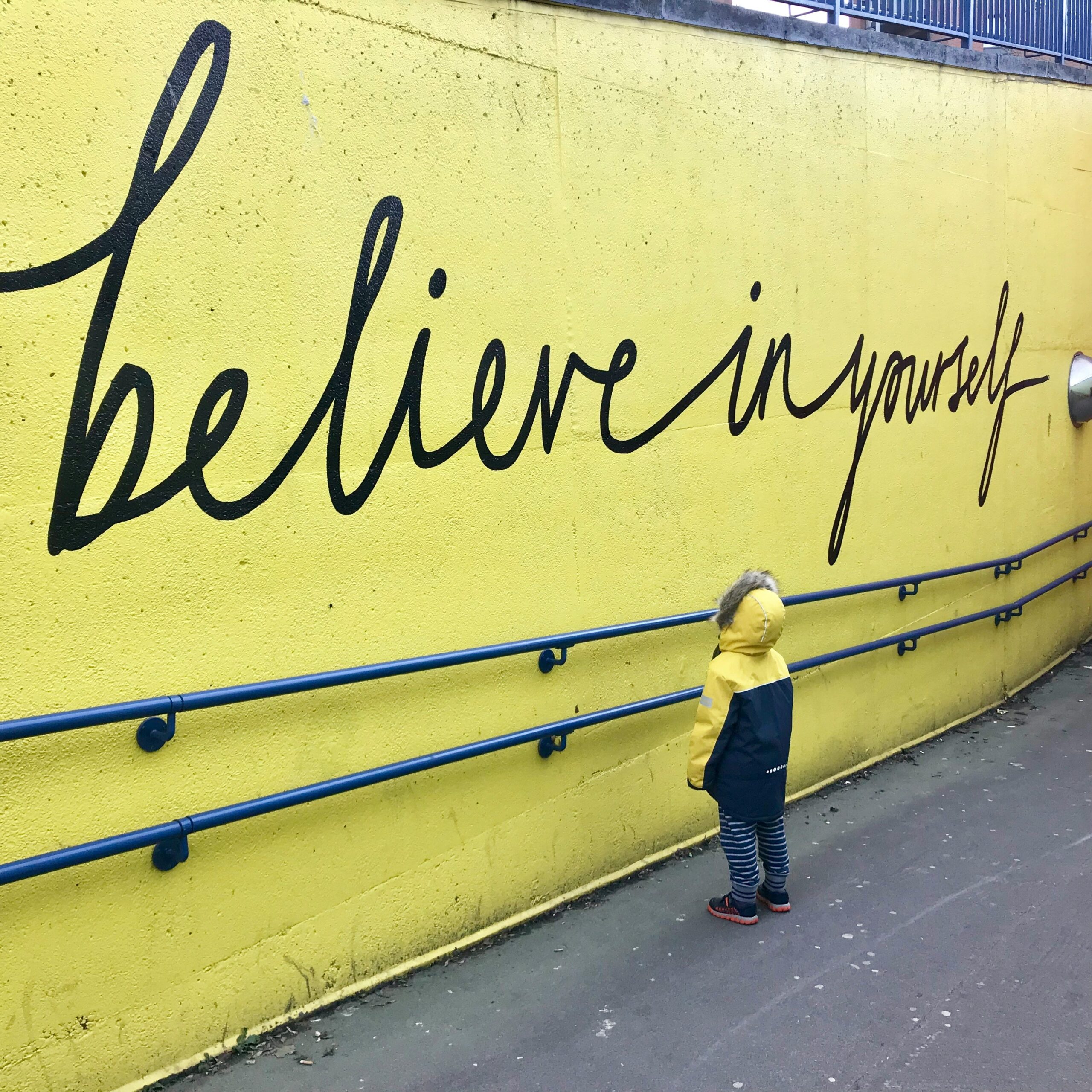
child in yellow and blue rain coat looking a yellow-painted brick wall with scripted writing "believe in yourself"

When Mindset Matters, and What to Do

Posted by Carolyn on
 February 15, 2024
  ·  No Comments

child in yellow and blue rain coat looking a yellow-painted brick wall with scripted writing "believe in yourself"Our minds are not easy to manage. There are times when mindset matters more than others.

Reality Check

Harsh reality greeted my 5 am routine this morning. One of the boats had dismasted in the southern Atlantic.

I am mesmerized, like thousands of other sailors around the globe, by the progress of the boats in the 2023-2024 Global Solo Challenge. The sailing event is a single handed, non-stop, around-the-world race passing by all three of the major capes: Cape of Good Hope (South Africa), Cape Leeuwin (Australia) and Cape Horn (Chile). A seasoned sailor, I can confirm this event is not for the faint of heart, will or nerve.

In the months since the event started, there have been many breakages of varying severity. Boats have resigned from the race for a variety of reasons and pulled into safe harbour. Other than severe personal injury, or a hole in the hull, the dismasting of a sailboat is probably one of the most severe of potential damages. Without the mast and even a small amount of sail in place, sailboats become unstable in wind and high seas.  A small amount of sail can stabilize the boat, moving it forward to run with the wind.

Back to this morning; news of a dismast was bad enough. Making matters worse, a major weather depression with high winds and seas would arrive within 30 hours at the vessel’s location. The sailor made the extremely difficult and heart wrenching decision to seek assistant for a rescue. The coast guard was alerted, nearby boats were notified; one nearby ship has turned around. Rescue is expected, hopefully before sunset.

view of setting sun over leeward deck of sailing yacht.Why Mindset Matters

I can’t imagine what would be going through the mind of the skipper. Options? Resources? Panic?

Sailing solo requires the ability to think clearly under the most pressing of conditions. Alone, it is essential to maintaining a calm, composed brain that can keep identifying challenges and solutions. Most importantly, you have to believe that the solutions will work or that there even is a solution.

I noticed the similarity between this skipper’s mindset and that of clients and colleagues who were successful in their goals. Most of us don’t fear for our safety in the middle of the Atlantic Ocean. Sometimes however, we can feel quite adrift in the personal or entrepreneurial ocean of challenges.

Managing Our Mindset

Do you believe that things will go well? If they don’t go well, do you believe you can find a solution?

Can you stay positive in the face of challenges? Can you say you will be successful?

These skills, and I do believe they are skills, take time to develop. High performance athletes work with mental performance coaches to train themselves for mental toughness. Mental strength helps them manage through fear and the weight of expectations. A “can do” mindset promotes creativity to find solutions under pressure. Faith in one’s abilities provides confidence when making decisions under pressure.

woman sitting on hill cross-legged looking out over valley in peaceful environmentStrategies for Mental Toughness

You may not have access to a mental performance coach, however, you can still strengthen you mindset to support your goals and dreams. Here are some strategies to try. Use whichever works for you. There is no right or wrong choice.

  1. Practice meditation. Meditation requires mindfulness which promotes awareness. Awareness helps us notice what is working and what isn’t. With this awareness one can focus on doing more of what leads to solutions and less anything else. Meanwhile, the meditation keeps us grounded in the here and now, rather than living in fear of the future or regrets of the past. Meditation can be as simple as a walk in a forest, noticing what is happening now: birds singing, a wind blowing, the colour of the sky.
  2. Write down your goals, both short term and long term. When written, ambitions become tangible and real. A tangible challenge is far easier for which to create a solution than a nebulous, unclear dream.
  3. Break it down. Whenever something is unclear, overwhelming or frustrating, write it down and then break it down. Breaking a task, project or challenging situation into its smaller parts, helps us find a place to start. Keep breaking steps down until you find one that you can accomplish with 100% certainty.
  4. Read books that discuss strategies for success especially around mental toughness and a positive mindset. One of my favourites, and a simple, easy read, is Who Moved My Cheese by Sr. Spencer Johnson. I especially recommend the follow up books Out of the Maze and The Present.

Back to Reality Checkup

With a “can do” mindset and strategies that have a tried and true track record for success, most tough situations can be managed. You will find yourself committed to finding a solution and achieving success. You may also find yourself less stressed and enjoying the challenges of your entrepreneurial, other career or personal life.

Update: The sailor was rescued within 24 hours, before dark and before the storm arrived at his location.

Clarity Mindfully I AM Evolving Coaching Productivity
Tags : mindset

Habits: Tripping vs Thriving

Posted by Carolyn on
 February 5, 2024
  ·  No Comments

woman in brown sweater and scarf sitting on log an looking out over body of waterHabits can sometimes be very helpful. Other times they trip us up and get in the way of accomplishing our goals. In the Mindfully, I AM Evolving coaching program I support clients to recognized both and learn how to use, or modify them.

What is a Habit?

A habit is behaviour we do without thinking. It is an unconscious response to something. Habits are part of a triad identified by behaviour researchers such as Charles Duhigg. Our minds perceive a stimulus which creates a reaction and that in turn creates behaviour which we understand to be the habit. In his book, The Power of Habit, Duhigg identifies the cue, routine, reward loop which represents our habits. Our mind perceives a cue, we respond with a routine reaction and receive the reward that the mind has learned will be produced. A habit is a learned reaction to a cue which results in us receiving a reward.

Tripping Habitsyellow caution tape wrapped around yellow barricade.

Unfortunately, as we all know, not all habits help us get to where we want to go.  Anyone with a sweet tooth knows how hard it is to break the habit of eating the free candy of the hostess desk in a restaurant. For many it’s picking up their smart phone and finding themselves mindlessly scrolling a social platform without even realizing they are using up work, play or study time.

Thriving Habits

On the other hand, some habits help us to reach our goals or to stay safe or become a better version of ourselves. The habit of checking that the door is locked when leaving keeps us safe. Looking left then right then left again before crossing the road keeps us safe.  For members of the Robin Sharma 5 am Club, getting up early helps them move forward in personal and professional development.

Mindfulness, Awareness and Habitswoman raising hands in triumph looking our over lake

The Mindfully, I AM Evolving coaching program is a proprietary coaching program.  The program helps clients self-coach using a four step model. Mindfully, refers to developing awareness. I stands for Intention, identifying who they would be as their best self. The A refers to Attention or where to place their energy, what strategy is required, to become that person. Finally, M stands for Mindset; what do you need to know, understand or believe in order to make that Intention a reality.

When it comes to habit, the first challenge is to identify that a habit exists. Using mindfulness – defined as paying attention, on purpose, in the present moment without judgement – one starts to develop awareness of one’s unconscious actions, behaviours or thoughts. Unconscious actions, behaviours or thoughts are, in fact, habits.

So What? Now What?

That’s great Carolyn but what do I do with all this?

With awareness, we can decide if we like how the habit impacts our life. If you like the outcome, great, do more of it. If you don’t like the outcome, modify, manage or eliminate the habit to get a better result. Awareness allow us to decide what to do. When we don’t even notice we are doing something, its impossible to change it.

To help yourself become more aware of your habits, try an experiment. See if you can develop the awareness to catch yourself using a habit. Reserve judgement, just be aware.

What did you notice?

How does it impact your ability to be successful?

Is it causing you to trip or to thrive?

What would be a better action or what can you do instead?

What will you do next time? How will you catch yourself?

Using these few questions you will develop the mindfulness to catch yourself in a habit which you can then arrange to modify if need be.


Habits Mindfully I AM Evolving Coaching Organizing Challenges Productivity
Tags : habits, organizing strategies
person's legs with red running shoes lying on white hammock

Delay and Procrastination: Same or Different?

Posted by Carolyn on
 January 31, 2024
  ·  No Comments

How does one determine whether not doing something is delay and procrastination?

Procrastination is a one of the most common complaints and issues for all my clients whether they are seeking my support for decluttering, down sizing, business or life coaching. Curiously it all looks the same and the concerns are expressed the same way.

“Why do I keep procrastinating when I know I should be doing this (filling the blank with desired goal to accomplish)? Why can’t I just do it?”

Delay vs Procrastination: The Differencewhite balance scale with apples on one weigh plate.

Timothy Pychyl is one of my favourite resources on procrastination. His book Solving the Procrastination Puzzle has been a great resource and provided extremely helpful information.

Pychyl defines procrastination as “needless voluntary delay”. In other words an individual is choosing to delay action on an item, unnecessarily. He points out that other delay may be caused by factors outside of our control, resulting in a frustrating delay. For example we may need to wait for a supply back order to be available before starting on that fabulous DIY project. A delay may be caused by a shift in priorities. Instead of working on the project the weekend the supplies are available, you time is redirected to caring for a sick child. Balancing and juggling priorities is a day to day challenge for most people.

According to Pychyl all procrastination is delay but not all delay is procrastination. Some delay is waiting on another thing to be completed. Delay could activities out of our control.

Someday I Will Syndrome

Then there is the someday syndrome. Goals we have are unspecific. It is hard to accomplish something that is vague. When there isn’t an clear outcome, date and deliverable in place, often there is a lack of accomplishment that goes with the vagueness.

Solutionscalendar open to days of week with blue and orange market sitting on top.

Here are four key solutions that may helping with your delay and something thinking:

  • Write it down. Whatever it is you want to accomplish, get it writing down to make it real and tangible.
  • Break it down. Large vague project are really hard to move forward on. Make the project or item smaller and smaller into pieces and until you are guaranteed to e successful.
  • Schedule the action or project. Most likely unless it is a very small project, you will be scheduling pieces of activity that lead to completion.

Conquer Procrastination Cheat Sheet cover


For more help with procrastination strategies, pick up a free copy of the Conquer Procrastination Cheat Sheet.


Mindfully I AM Evolving Coaching Organizing Challenges Organizing Time Productivity
Tags : Goals, Procrastination, Time Management, Understanding disorganization
Next Page →

Banish those procrastination gremlins!

Conquer Procrastination Cheat Sheet

Struggling with procrastination gremlins? Grab your free copy of Conquering Procrastination Cheat Sheet: 4 Procrastination Gremlins and the Tricks to Beat Them.

This field is for validation purposes and should be left unchanged.
Name(Required)
Caldwell Evolution | Copyright © 2026 All Rights Reserved
Website by Janet Barclay