Caldwell Evolution
  • Home
  • Organizing Services
  • Coaching
    • Evolved Momentum – Productivity Coaching
    • Evolved Momentum – Business Coaching
  • Courses
  • Blog
  • About
  • Contact

Author Archive for Carolyn – Page 4

Many pieces of paper with "Alternative" written on them in different colours and fonts.

Decision Fatigue: What it is and how to manage it

Posted by Carolyn on
 July 20, 2023
  ·  No Comments

Decision fatigue is more common than one might think. As an organizing professional I see it a lot. But what is it really, how does it show up and what can be done about it? This blog article takes a look at the idea from an organizers perspective.

Definition

many white tabs with "Option" writing on them in different styles and colours.

According to Wikipedia, decision fatigue refers to the impact of having to make too many decisions, or too difficult decisions, in a short space of time. In other words, it is the impact of that experience that is the fatigue referred to by psychologists.

Decision fatigue is “the idea that after making many decisions, your ability to make more and more decisions over the course of a day becomes worse,” said Dr. MacLean, a psychiatrist. “The more decisions you have to make, the more fatigue you develop and the more difficult it can become.”

What it looks like when organizing.

As I mentioned this is a common experience for me as an organizing professional. Because I work with individuals affected by chronic disorganization, I specifically designed the hands on portion of my business to be face to face with clients for only 3 hr sessions at a time. (Sessions for packing and unpacking associated with move management are longer). The reason is specifically due to decision fatigue.

It did not take me very long as a newcomer to the industry to recognize that clients would literally stop making decisions at about 150 minutes, or 2.5 hrs into our session. I had already been introduced to decision fatigue while taking a Masters in Health Services Administration degree. So, I knew this could be an issue.

There are six ways decision fatigue shows up. Avoiding decisions, or glazing over, is just one of them.Many pieces of paper with "Alternative" written on them in different colours and fonts.
  1. Reduced ability to make a trade off: in this impact, my clients can’t decide between choice A and choice B. If we agree that they will only keep one of two items, they can’t decide which one to choose.
  2. Decision avoidance: this second impact shows up as the client not wanting to make any decisions at all. Clients will sometimes show distraction from our task, ask me to make the decision or, for those who have more self-awareness, simply throw up their hands and state “I can’t decide”. For the record, no, I don’t make those decisions for my client.
  3. Impulsive activity: this is especially true for purchases at the cash register for shoppers. In organizing however, this impact of decision fatigue often show up as “throw it all out”. Clients impulsively decide to get rid of everything because they simply don’t have the mental energy left to decide.
  4. Impaired self-regulation: this is when the client doesn’t hold themselves to their usual standard of behaviour. Clients tend to get irritable and may be short or “snippy” with me or someone else in the family.
  5. Susceptibility to decision making biases: in this impact, the client tends towards an easier decision vs a correct or wise decision. It may be easier to simply not discard anything from a “I don’t like this” clothes pile than to be able to determine if any could hold any more value in the client’s future.
  6. Decision conflict and regret: In this impact the client becomes more and more worried about making a wrong decision. Eventually they just stop making decision altogether.

What do to about Decision Fatigue?hand with pole balanced on it show signs in opposite directions each saying "I don't know"

There are several ways to manage decision fatigue. When working with clients, I use whichever one works. I recommend you use whatever works for you.

  1. Take a break from the project you are working on. If possible physically remove yourself from the location and go to somewhere else even if it is just another room in the house or another office. Spend enough time in this other location doing something else until you feel at least a little bit refreshed.
  2. Change the task. If you are organizing clothes, try switching to working on a work project or making a meal. If possible, try switching to an entirely different task, however, even making decisions about a different set of items will help. If you are sorting clothes, try moving over to books.
  3. Go for a walk in nature. Walking in the woods, in a park or even just down the street will help to refresh your mind and your decision making muscles.
  4. Ensure you are adequately hydrated and have eaten enough to that point in the day. Many times while working, clients forgot to eat and drink. Hydration is most important however, being adequately nourished is also important.

Have you ever experienced decision fatigue? What was your experience? Drop me a note in the comments.


Action Declutter Organizing Challenges Organizing Resources Strategy
Tags : Clearing Clutter, managing mess, managing overwhelm, Organizing Maintenance, organizing strategies, Understanding disorganization
hand with thumbs up agains blue sky and white cloud

Celebrate to be More Productive

Posted by Carolyn on
 July 12, 2023
  ·  No Comments

hand with thumbs up agains blue sky and white cloudSay “celebrate” and many people think champagne, confetti and fireworks. In fact, try and find a royalty-free picture for celebration and I was hard pressed to find one that didn’t include champagne, crystal glasses or someone toasting.



What if a high five, pat on the back or simple acknowledgement of accomplishment could help you get things done? I think it can and does and encourage all my clients to celebrate on a regular and consistent basis.

Celebrate Yourself

The first task is to learn to celebrate yourself. How good are you at it?

Many of us are not very good at all. We are great at being critical and telling ourselves we can do better. How often do we say “Hey, I did that. Way to go”?books, glasses, rose bouquet and end of keyboard on desk.

I can use myself as a great example here. Yesterday I went for a walk, 3,000 steps I might add, for the first time since developing a cough last October. It took almost a full six months to resolve the cough. In the meantime, I did not feel up to walking. When I returned home I found myself standing in the kitchen, reflecting on my accomplishment. After regular daily walks over 10,000 steps for three years, and a hiatus of over six months, I was finally back hitting my stride; literally. And then I realized I could walk the talk and celebrate my own success. I gave out a holler and a woop and raised both hands int the air. “I did it!”.

Wow that felt good. There already were fresh flowers on the dining room table. Otherwise, I would have bought myself some more.  Maybe I still will and put them in my office.

Micro Tasks and Celebrationchild's hand with many colours of paint showing the palm and 5 fingers

Let’s continue the conversation about micro tasks. They go hand in hand with using celebration as a productivity tool.  For a quick review, micro tasks are very, very small, specific tasks that take less than five minutes to complete and, are so simple, that you know beyond a shadow of a doubt, you can be successful.  Overwhelming, daunting projects can all be broken down into micro tasks. Stack a series of five minute micro tasks on top of each other, and even an overwhelming project can be accomplished.

With the completion of each micro task is the opportunity to celebrate. Micro tasks are so small, it gives us lots of opportunity to celebrate, over and over and over again. Pat yourself on the back, give yourself a high five, woop and holler in the kitchen like I did, and recognize you got the task done.

Each time you acknowledge and celebrate, your brain registers the accomplishment and you earn a little hit of the brain juices associated with accomplishment and celebration. And because the tasks are so small, and you are guaranteed to be successful (according to the definition of micro task) there are lots of chances to keep that celebration going. And that brings lots of chances for your brain to earn the celebration juices.

Celebration and Productivitygreen eye with clock on eyeball showing 11:55

Individuals who struggle with productivity often stall or stumble due to procrastination, fear of failure, perfectionism and a myriad of “what if” scenarios that may or may not be realistic. Using micro tasks to generate action and therefore energy can often be a route through these stumbling blocks. So the question becomes, how to get started and how to keep going.

By celebrating the completion of each micro task the brain is rewarded with some dopamine. This in turn makes us feel good. When we feel good we are more likely to repeat the behaviour to make that good feeling return. Now I am reminded how good it felt to walk my 3,000 steps again, I am more likely to do it again. When I do, I will celebrate again, receive another dopamine surge and want to do it again.

We know we miss 100 percent of the shots we don’t take, a reference to hockey and sports in general. The same is true of productivity; if we don’t try, we are guaranteed not to be successful. Instead, pairing up micro tasks and celebration is even more powerful than either strategy used by itself and, helps to move beyond the usual stumbling blocks of unproductive behaviour. The more micro tasks you try, the more you are successful; the more you are successful, the more you can celebrate; the more you can celebrate, the more you feel good about your success; the more you feel good, the more likely your are to try again; the more you try again, the more likely you are to be successful. It’s a winning formula.

I’d love to hear about your success. What have you celebrated recently?

How did the micro tasks work for ou?


Action Mindfully I AM Evolving Coaching Productivity
waves on beach, writing happy birthday to Caldwell Evolution

Yearly Planning with Micro Tasks

Posted by Carolyn on
 July 6, 2023
  ·  No Comments

A New Fiscal Yearwaves on beach, writing happy birthday to Caldwell Evolution

July 1 is the beginning of a new fiscal year for Caldwell Evolution and yearly planning is on the calendar. Micro tasks have come to my rescue again. Yearly planning can be fun, however it can also be overwhelming. Using micro tasks and a dedicated planning process, I was able to get through the process, and get excited for the year, without feelings of overwhelm bogging me down. The process I use is very effective and when paired with micro task strategy, it also be very powerful.

The Yearly Planning Process

The yearly planning process for me involves a review of goals and achievements from the past year, analysis of what worked and what didn’t, setting goals for the following year and some KPI’s (key performance indicators) to go with them. The process I use comes from a coaching program in which I invested during the covid-19 pandemic. I learned a 3 step process from Fabienne Fredrickson, founder of Boldheart.

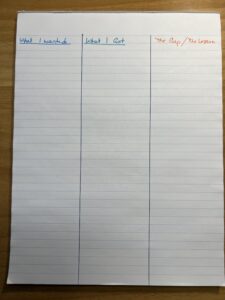
The process works well if documented on a three column table. Take a piece of paper and divide into three vertical columns. At the top of column one write the title “What I Wanted”. For column two write “What I Got”. Finally, at the top of column three write ‘The Gap, The Lesson”

Step One: What Did YouWant/Desire?Three columns on a piece of white lined paper marked what I wanted, what I got and what is the Gap or Lesson.

Step One is carefully listing what you had wanted for the year. (I am assuming you are also using this for yearly planning. If not, use whatever time frame within which you are planning.) When planning for the previous year, what were you hoping or expecting to attain during the year.  No judgement, just list each item on your table in the first column to the left.

Step Two: What Did You Get?

In the second column, titled “What I Got”, write down beside items in column one what actually happened by the end of the year. Did you expect $100,000 in revenue? What did you actually achieve? Were you hoping to travel to a hot vacation location? Did you travel? Again, no judgement; at this point just write the facts. Column two is the first of two reality checks. Be honest.

Step Three: What is the Gap/What is the Lesson?

In the third column, beside the items in column one and two, write the difference between what you wanted and what you got. In addition, what did you learn from that difference (gap)? What was the lesson? You may have achieved or received more than you wanted or desired. Or you may have achieved less.  In both there is something to be learned about what you did to make it happen or what you did that prevented your goal from being achieved. This is your second reality check. Look at the habits or behaviours or things you did, in other words had control over, that made the desired achievement happen, or not happen. The high performance athletes review this as “How did I control the controllables to set myself up for success?”

Using Micro Tasks

This is where I find the micro tasks most helpful. Writing all that down can get tedious for me. It takes some brain power, thoughtfulness and time. If I am not careful, the process doesn’t actually get finished and I never fully commit to the key performance indicators. By breaking each step down, I completed not only this tedious part of yearly planning, but the entire yearly planning process over the course of a week.  Breaking down into micro tasks meant using really short work sprints.

Micro tasks can be as small as 5 minutes. For this task, I worked in 20-30 minute sprints. Because I had written goals for fiscal year 2023, I simply logged those in column one. That was one task. Column two took a bit more work since I had to review what was actually achieved over the year. That took a couple of time sprints. Finally, column three is more about analysis. Those I tackled one item at a time and gave myself permission to get up and do something else in between items.

With the columns filled, my next task was to identify what I want to achieve in fiscal year 2024, what success would look like and what the key performance indicators would be. Again, I broke the process into small tasks by tackling each desired achievement as a separate task.

The Result

One of the benefits of working with micro tasks is the built in reinforcement the strategy offers. When each task is completed, your brain registers an accomplishment and with it, all the lovely positive chemicals that go with that. Accomplishments don’t have to be huge. They can be small.  Using micro tasks to avoid feelings of overwhelm, creates more accomplishments.

Are we fooling our brains? Maybe, however, sometimes that’s exactly what has to happen to get through a bigger project. Breaking a big project into a series of micro tasks can be a game. Each step completed is worthy of a celebration, check in a task list, high five and a cheer. String together those micro tasks and the project is done.

Yearly planning? Check.

Caldwell Evolution News Mentored for Momentum Coaching Planning Productivity
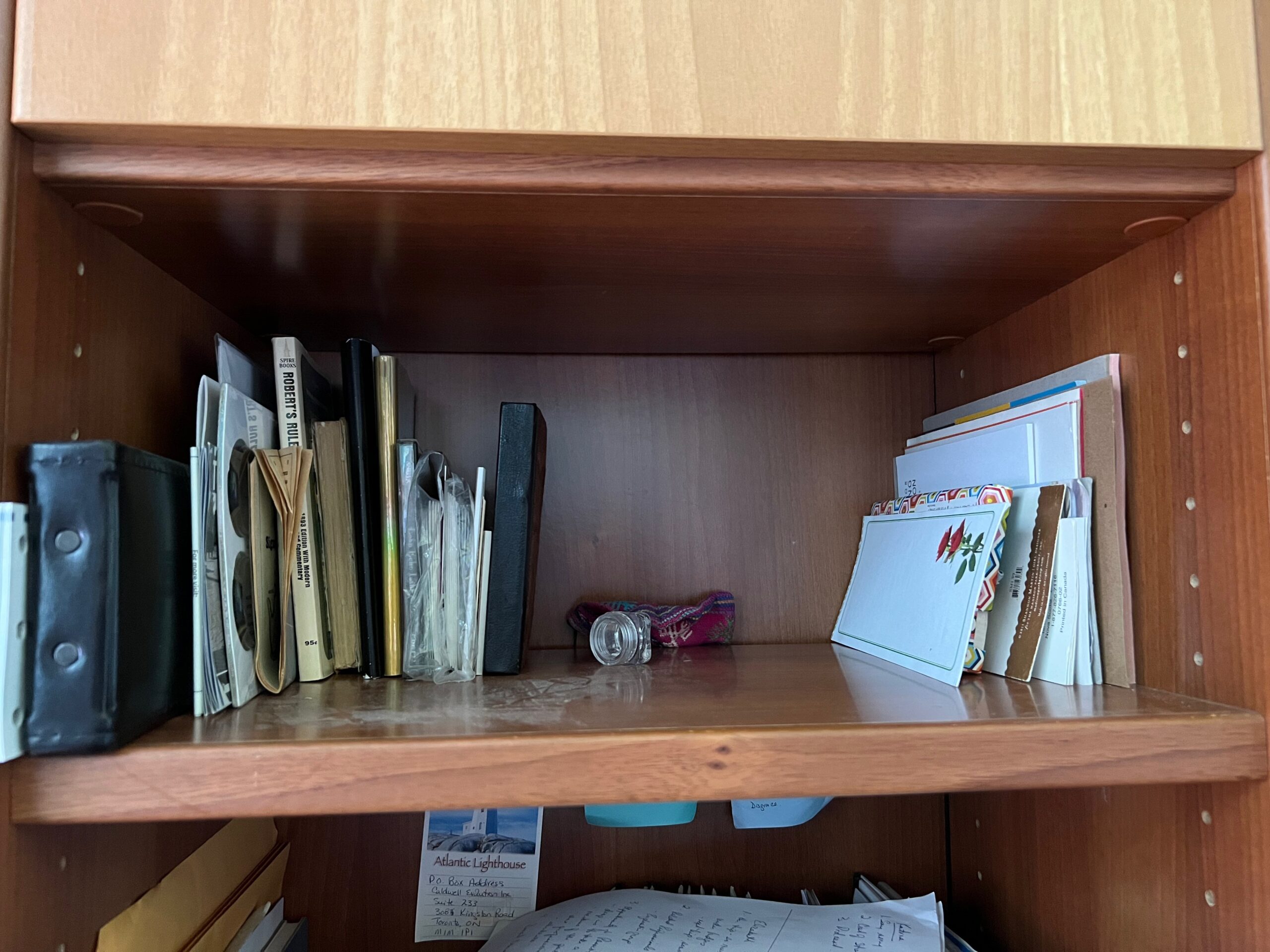
shelf in desk unit half empty

Micro Tasks

Posted by Carolyn on
 June 26, 2023
  ·  No Comments

Micro Tasks Challenge the 15 Minute Declutter Routine

Could it be that micro tasks could be even more successful than a daily 15 minute declutter routine? I say yes; I think they can and that we ought to all jump on this bandwagon. Micro tasks could possibly even replace the 15 minute declutter routine.

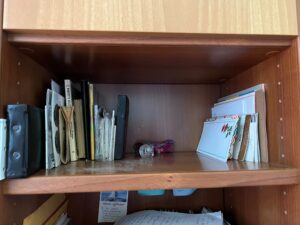
How it Startedshelf in desk unit half empty

Mindlessly, I was stared at the shelf beside my desk. I had done so countless times before, while thinking through yet another online tech challenge. I have no recollection of sorting out the tech issue. It was clear there were things on the shelf I had not used in years and was never likely to use. In a split second, I decided to clear the shelf, wipe it off and remove to a donation pile those things I would not use. Like the audio CD for learning Spanish. I no longer have a CD player on my computer or portable device to play it.

In less than 5 minutes I had a clean shelf that was now half empty, a small bag of denotable items and a few items in recycling and garbage. The result of my micro task was a very satisfying declutter. The shelf is half empty, clean and can be used more effectively.

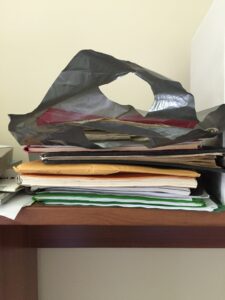
Micro TasksPiles of paper and filed on a desk top.

I soon determined that micro tasks could be done almost anywhere, almost any time. I’ve made a game of it. Just this morning, while waiting on the front door step for my son to load the car before leaving, I clipped back the trailing plants in the planter. The micro task took 5 minutes. Later while waiting for a video clip to upload, I wiped the windows sill, rinsed the stained-glass ornaments, took away the ones I no longer wanted and put everything back. Another 5 minutes.

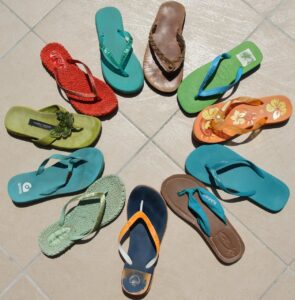
I’ve defined micro task as a 5-10 minute task that can be completed with little or no additional equipment and contributes to clutter free living. Two days ago I took the ski jackets out of the front hall cupboard, inspected for rips and tears and transported to our off-season storage rack in the basement. I’ve got my eye on a shoe rack with 5 pairs of flip flops that haven’t left the rack in awhile – maybe 2 years. While waiting for the kettle to boil, I can scoop up the flip flops, inspect for integrity and bag for donation. This last task makes use of the concept of time layering along with micro tasks.

The Gamebrightly coloured flip flops in a circle all touching toes.

Try it.

  1. Look for 5 minutes either between other projects or activities or while waiting for something else to happen (standing in line)
  2. Look around for a 5 minute task that is super easy to accomplish. For example, while waiting for the pasta water to boil, take the cutlery out of the cutlery tray, wash the tray and replace the cutlery.
  3. Make a game out of finding a micro task that doesn’t require any extra equipment (except maybe a cleaning cloth).
  4. Make sure that the task contributes to either decluttering or getting something done. For example, I filed the top few items on my paper filing pile waiting for yet another video to upload,.
  5. See how many of these you can do in one day.

The Benefit

Five minutes may not seem like alot of time. Those 5 minute tasks, however, all add up. The paper requires filing. The shelf requires decluttering and the flip flops require a new home.  Add all those micro tasks together, all those 5 minute games, and eventually, you have a clutter free house.

Try it, and let me know how it goes.

Declutter Organizing Strategies Productivity
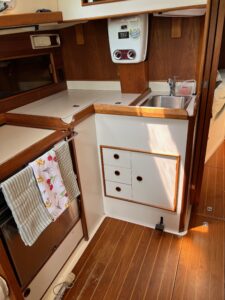
Galley of sailboat

My Favourite Strategy

Posted by Carolyn on
 June 19, 2023
  ·  No Comments

water lines below deck on boat

The Reality

Faced with the magnitude of a project on the weekend, I realized that I refer to my favourite strategy, either productivity and organizing, more often than I realize.

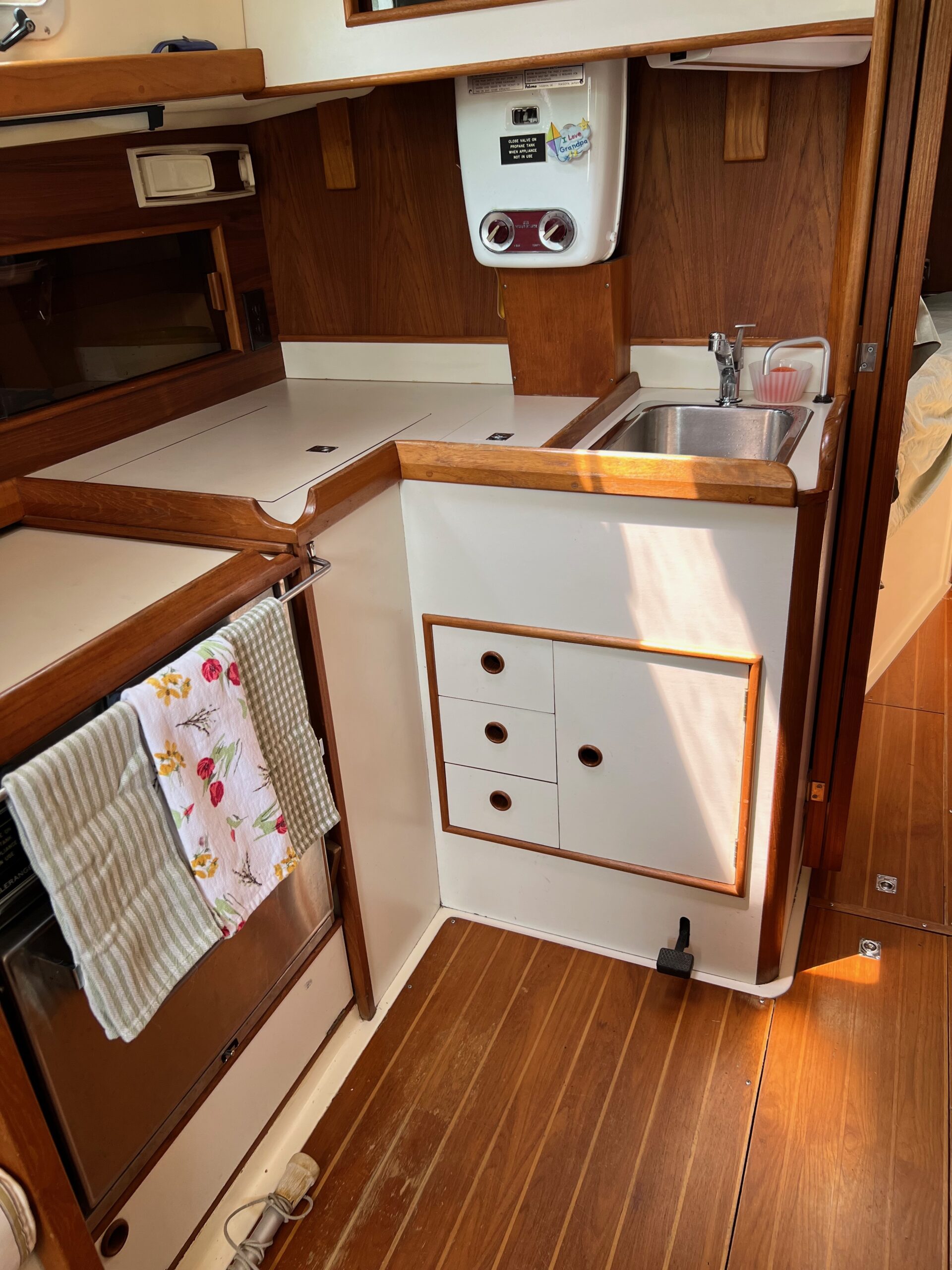
There I was staring into the bilge of my baby. She’s not a big yacht. She is just big enough to require lots of work and weekly, monthly, seasonal and annual maintenance.  You may have heard the expression “a boat is a hole in the water to throw money into”? Yup, that about sums it up. That picture is the water lines in the bilge beside the galley.

In this case it wasn’t the cost of the project, it was how to do the darn thing.  I knew what the end result had to be: tank and lines flushed and filled, inside wiped down with vinegar, dishes and cutlery cleaned, cupboards cleaned out, water filter check, floor washed.

I was struggling with how to get there.  What was the sequence? Why didn’t I write it down last year? Where were last year’s notes anyway? Why couldn’t I just go sailing….?

The Challenge

Frustrated and discouraged, wondering if I ought to have stayed home and worked on my year end finances, I went out to the cockpit. My task list notebook was waiting for me, never far from reach. As I stared at the empty page in my notebook, I thought “this is what my clients maybe feel like before we work together”.

The water system needed to be drained of the potable antifreeze from the winterization. The inside of the boat had to be wiped down with vinegar (my anti mold weapon). The cushions needed airing, other things needed washing. I scribbled away.

The Solution

Break it down. Then break it down again.

This is by far my favourite organizing and productivity strategy. I wrote everything I could think of that needed to be done. Then I did my best to try and sequence the steps.  Some were two person jobs.  I reassessed what I could do alone, and where I needed someone else to help.

Even just seeing the list made me feel better. The tasks seemed more concrete and less overwhleming. The project seemed doable but maybe over two days instead of one. The extra set of hands would have to wait for the second day.

Throughout the day I checked in regularly with the list.  This kept me on task.  Yes, I strike out what is complete. This keeps me motivated and energetic. And if you followed my Instagram account, you know I had to take a break at lunch to reassess progress again.

Here’s a peak at the list IMG_3821 after day one.

The ResultGalley of sailboat

Everything got done right down to washing the dishes and setting out the sheets not the berth. Fresh water in the tanks. Filter clean. Fresh dish towel on display – ready to sail and entertain.

My favourite organizing and productivity strategy came through again.

What’s your favourite strategy? Do you have one. Feel free to borrow mine. It works.Forward v berth on sailboat with green linen

Organizing Challenges Organizing Sports Gear Organizing Strategies Productivity
Tags : organizing strategies, productivity
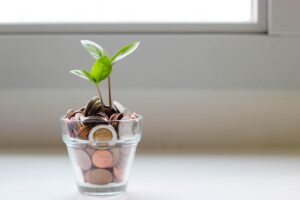
small plant growing out of jar with pennies showing earning a living

Learning to Earn a Living

Posted by Carolyn on
 June 5, 2023
  ·  No Comments

small plant with few green leaves grown out of glass jars with coins in it, learning to earn a living Service & Livelihood as an Entrepreneur


Learning to earn a living as an entrepreneur is not as easy as it sounds. Some people think all entrepreneurs are good at attracting money. Not the case. Some entrepreneurs are just creative folks with great business ideas. This is such an important topic I spend a whole session on it in my Mentored for Momentum Course for professional organizers. This past weekend, I was reminded myself of the importance of earning a living.

Service & Marketing

Modern marketing teaches us about speaking to the pain points of our ideal client. What is the transformation your ideal client seeks that your service or product can provide? To make marketing feel not so icky, not quite so “I hate to promote myself” kind of feeling, today’s marketing gurus teach us to speak directly to our client. Focus on the transformation your service can provide and not on selling.

That sure sounded good to me and that direction has had an impact on the way I market. I was bitten hook, line and sinker many years ago when first introduced to the “provide service and the money will come” concept. At the time I was already a seasoned entrepreneur and struggling to market my business in way that didn’t feel like I was always trying to sell something. I felt like I was. So I switched up my strategy and started to focus on resolving my clients’ head ache and heart ache. The head ache is what makes them angry and frustrated.  The heart ache was what made them sad.

The Need to Earn a Livingsmall plant with few leaves growing from pile of pennies

Even teachers can need a lesson reminder from time to time. This past weekend my lesson was “even the most creative and service oriented amongst us still need to earn a living”. It came from one of my favourite YouTube influencer couples Boho Beautiful.  This is a couple who filled up their YouTube channel with hundreds of free logo classed and guided meditations. I followed them for years from their free material before it occurred to me to buy a program or their membership.  In addition to their YouTube free content, they fundraise for animal shelters when on the road with their business and provided support to ailing dogs while travelling in Nepal.

In their June 2023 monthly member checkin, Mark Spicoluk asked the question “Why do we do all this?” His answer was “to provide service and support the family”. Hmmm, support the family.  That’s right; even the super successful, millions of follower types on YouTube still have to remember at the end of the day, they have to earn a living.

The Balance

As with so much in life, balance is necessary. Modern marketing is about providing service. We are looking for the know, like and trust factor that we can resolve the headache and heartache of our ideal clients. AND it is about earning a living and supporting ourselves and our families. It’s good to be reminded to provide service and focus on the transformation our clients need. There is  also nothing wrong with making money while we are at it.  “The last time I checked, we all pay the same price for milk” is one of my favourite expressions with my mentoring students.

So, if you are an up and coming entrepreneur, focus on providing great service. And, remember, it ok to earn a living.

If you are one of my idea clients, you ought to expect to receive great service from us entrepreneurs.

Gratitude Mentored for Momentum Coaching
Tags : Client Questions, Goals, professional organizers
image of valley seen through a crystal ball on a rock ledge

Mindful Reflection

Posted by Carolyn on
 May 29, 2023
  ·  No Comments

image of valley seen through a crystal ball on a rock ledgeWhile mindfulness is designed to create awareness in the moment, mindful reflection gives us an opportunity to develop awareness of the past. That awareness give us the chance to look at something from a distance; to examine it from different angles.  And just maybe, we can see things from a different perspective.

Reflection

I was hunting for photos on Unsplash.com and Pixabay.com, my two favourite royalty free photography sites. My goal was to find a photo to illustrate the notion of paradigm for my Instagram account @caldwell_evolution (shameless plug for more followers). The photo of a crystal ball reflection caught by eye. While it was perfect for Instagram post I was working on, it also made me think of reflection.

Mindfulness instruction schools us to be aware, on purpose, in the moment without judgement. What if we could also be aware, on purpose, of the past without judgement? How is it that through mindfulness we allow ourselves to suspend judgement of our thoughts, habit or behaviours as they are happening and not in reflection? What’s wrong with looking back a little farther and seeing what cold be learned?

Mindfulness and Awareness and Reflection

So I wondered if Mindfulness could be applied to gain awareness and insight into things that had already happened.  Wouldn’t it be great to suspend judgement for things we realize from the past along with the here and now. And like the crystal ball reflection, could we use the reflection to turn things upside down and see them from a different angle.

Perspectivelooking at the upside down reflection through a crystal ball of a beach and water

So much of the productivity coaching I do is supporting clients to see how their perspective may be influencing their ability to move forward on their goals and dreams. A perspective of success, opportunity, positive thinking, excitement and anticipation usually leads to moving forward with the same eagerness. More negative thinking usually leads forward with frustration, failure and limited accomplishment.

Using mindful reflection to look back on a situation, without judgement, help us develop awareness without criticizing ourselves. That lack of judgement makes for a better chance to learn. What if our paradigm needed a shift? Is there a different way to look at the situation? Could turning the picture upside down and give us a different angle? What was there to see?

The Crystal Ball Reflection

Maybe I ought to have titled this post The Crystal Ball reflection. That special reflective dynamic automatically turns things upside down.  What looks the same or different? Does something feel the same or different? What would you do more of? What would you do differently? That awareness without judgement is key to creating meaningful change.

Clarity Mindfully I AM Evolving Coaching Productivity
Tags : awareness, Goals, Leadership, mindfulness, productivity
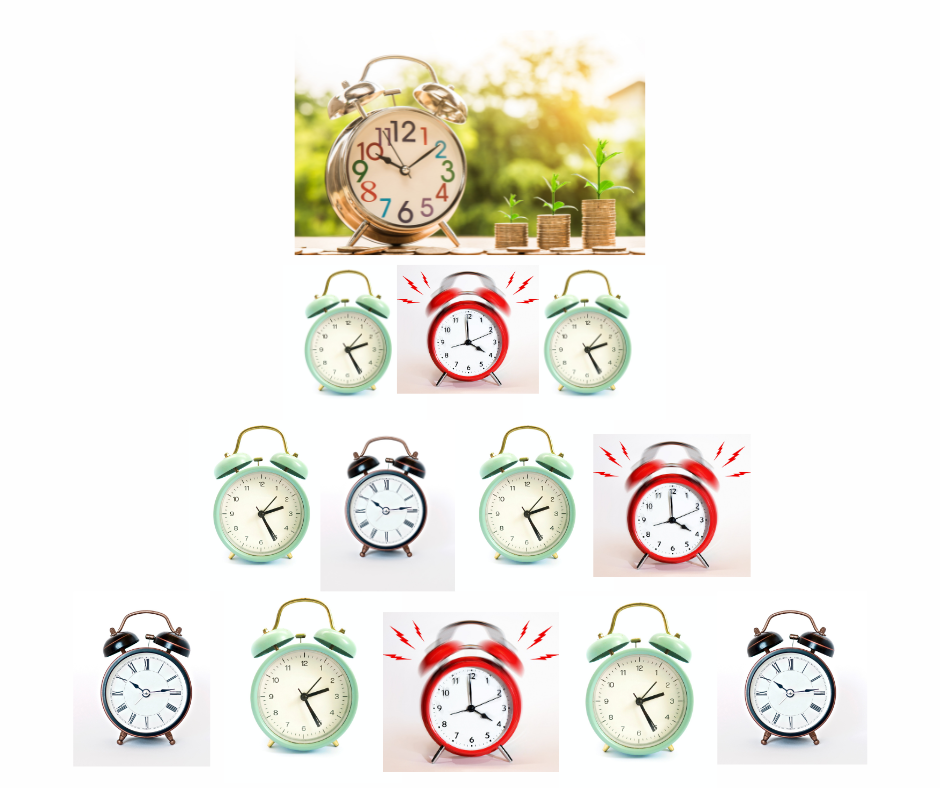
many clocks stacked on top of one another to show layering of time

Time Deepening: Lengthening Time with Layers

Posted by Carolyn on
 May 24, 2023
  ·  No Comments

Time Deepening vs Multi-taskingwoman in green dress holding up clock over her face

Time deepening may be the solution to the ongoing question, “Does multi-tasking increase productivity?” It’s a question that comes up frequently in almost any conversation on time management.  If you live with teenagers, it may come up frequently.  Teenagers seem to have taken multi-tasking to new heights with ear buds, streaming, smart phone and homework all going at the same time.

I define multi-tasking as participating – at the same time – in two or more activities that each require our attention.  My experience is that multi-tasking does not work well.  Thus talking on the telephone and typing a report is multi-tasking. Similarly, making dinner while helping a school child with home work is multi-tasking; both require your attention in order to be completed.  If your attention is distracted from your task, it is unlikely that you will complete it well.  Your phone mate may perceive you are distracted or merely wait patiently for your attention to return to his/her question. The report may have errors.

What is Time Deepeningmany clocks stacked on top of one another to show layering of time

Time layering or time deepening is a strategy that does work.  I define time deepening as organizing two or more tasks that do not require our attention to be accomplished simultaneously.  In time deepening, only the top layer can take your attention while the other tasks are accomplished. Home managers have known this strategy for ages: wash the laundry and hang to dry – while drying, mix bread and leave to rise – while drying and rising cut beef/vegetables and set stew to simmer – while drying and simmering, knead bread and set to rise – while drying, simmering and rising, mend clothes.  Project managers differentiate between those tasks that must be accomplished in sequence.  These are time and order sensitive.  Other tasks tasks can be accomplished at the same time and therefore can be layering tasks.

If you work from home you may already layer your time without realizing that you are using this strategy: put on laundry, take out dinner meat to thaw, set coffee to drip, turn sprinkler on lawn – pour coffee, set to work on report.  One hour later you turn over laundry, turn over meat, move sprinkler to back lawn, refill coffee and back to report.

You get the picture.  Try it.  How many layers can you build into your time? 

Organizing Students Organizing Time
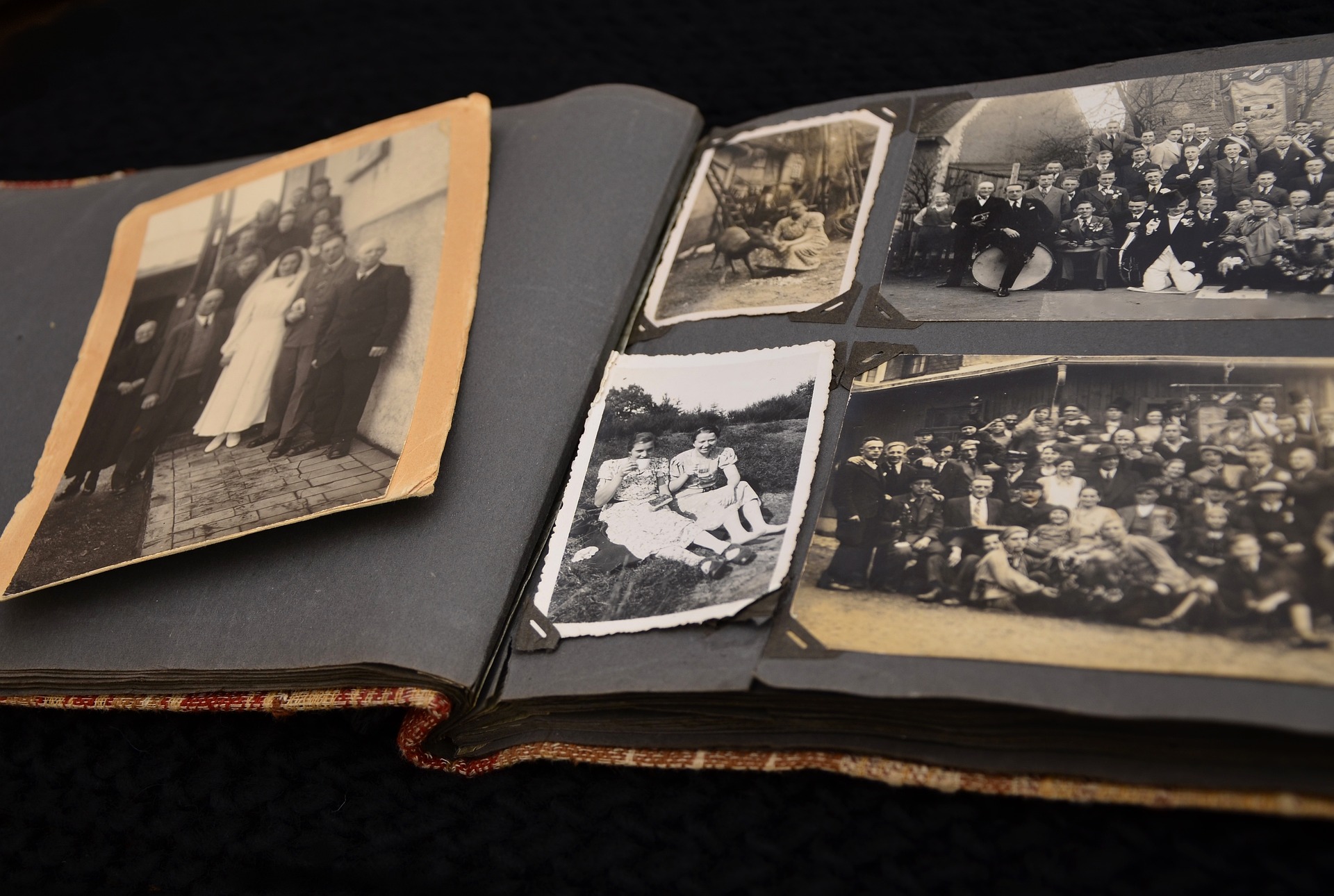
faded and yellowed black and white photographs in photo album.

Organizing Family History

Posted by Carolyn on
 May 10, 2023
  ·  2 Comments

The Challenge of Organizing Family Historyfaded and yellowed black and white photographs in photo album.

Like many people, organizing family history is proving to be a challenge. My father recently passed way and my sister and I are now sorting through generations of material. There are photographs, 8 mm film, VHS tapes and documents galore.   We are attempting to identify people and are struggling with how to preserve information. We fret over loosing something that we didn’t know was relevant and we wonder what we might have missed that would honour our ancestors. Meanwhile we are challenged to empty a storage unit that none of us want to pay for anymore.

Sound familiar? Is organizing the family history a challenge in your family?

Organizing Family History – The Bookold book with feather pen and old coin money on top

My great grandfather is affectionately known in our family as JY.  It stands for John Young Caldwell although we never call him that. Once upon a time, JY and his brothers determined that there was evidence of a family fortune in far away lands.  They made an attempt to find the fortune.  The brothers conducted meetings, kept minutes, contributed funds, hired lawyers in Ireland and waited for the results.  Their activities were beautifully documented in a black, hard cover note book ~ the Book ~ with elegant cursive penmanship.  The Book also documented  all the family members that were involved.

The Book, surfaced many decades ago and came into my hands for safe keeping.  I kept track of it at my parents’ home for years.  When I had my own home it was given a special place. Then my father sold the family farm and the family house. There was a storage unit involved. Shortly after I moved. When we unpacked I realized I couldn’t find JY’s Book. I was devastated that the Book may have been lost and all the beautiful and important history it contained.

Organizing Family History – Establish Guidelines

When my sister and I realized the magnitude of the task we faced, we realized we were going to have to make key decisions along the way. We created some guidelines to help establish our priorities and help with repetitive decisions.  Your priorities may be different than ours and therefore your guidelines could look quite different. Here are the ones we are using.

  1. End Goal: have as much material as possible scanned, digitized and converted into a book that can be given to family members.
  2. Discard photographs of landscapes that don’t appear to be significant.
  3. Focus on people and their accomplishments and only places as they are relevant. An example might be to locate where a family was living in order to track their immigration to Canada (where we live) or migration across Canada.
  4. Scan as many documents as possible. Almost all documents had already been removed from frames.   Digitized documents (and photos) can also be uploaded into the Ancestry.ca platform as well as online book creation platforms.
  5. Store family archival material all in one place. My sister and I have both created boxes to store things in our homes so that when items are found or sorted, they can immediately be relocated to this home. Having a home for items helps to prevent them from becoming clutter and makes them easier to find. This strategy also follows the basic organizing principle to keep like items together.

Organizing Family History – The Photographspile of black and white photographs in no apparent order

The Book did eventually show up as my sister and I fastidiously worked through clearing the storage unit. By now, life and family history had moved online and I had enlisted my ancestry.ca account to help with preserving information.

The family had kept dozens of photos in frames. We made the decision to scan the photos and discard the originals unless any family member wanted them. Scanning with our home based printer/scanners, in the frames, proved almost impossible for the larger photos. We identified that Staples, a North American office and computer supply company, had the facilities to scan oversized photos and documents. We still have outstanding questions such as cost, time and whether the photos have to be removed from the frames and if they could be damaged in the process.

Then there are the photo albums. We sorted older photos and took out landscapes that couldn’t be identified or weren’t interesting. We decided that we were interested in people more than places. Also, we will sort by date.  Some people prefer to sort by person, subject or location. Most important is how to preserve the relevance of the photo to your family. For us, chronologically made sense. Still, some photos were in albums and may be damaged if they were removed. And finally, we found negatives of photos for which we haven’t found positives. A quick review proved the subject was worth keeping.  A call to a specialty shop Digital Treasures confirmed they could likely print.

Organizing Family History –  Managing the Volume

Organizing is about making timely decisions and developing habits that avoid clutter and unnecessary accumulation.  As we wade through boxes and bins, the volume of material is almost overwhelming. In fact, the biggest challenge my sister and I are facing is how to manage the volume of material in a way that future generations can enjoy it without having to store it.

Organizing family history is a real challenge. It can be fun but it can also be overwhelming and daunting. Having some guidelines to start can help with decision making along the way.


Home Organizing Organizing Strategies Photo Organizing
Tags : Accumulation, family history, historic documents, historic photographs, organizing strategies
woman biting pencil staring at computer looking worried and frantic. Procrastinating

Top 5 Series – Indicators you’re Disorganized

Posted by Carolyn on
 May 1, 2023
  ·  No Comments

woman biting pencil staring at computer looking worried and frantic.Think your office might be seriously disorganized?

Not sure if you are disorganized enough to need help?

You have your own business which you love.  It does ok.  Clients are happy – most of the time.  But you admit to yourself when no one else is looking that things aren’t as good as you think they should be. You are really afraid someone besides your accountant and CRA, or IRS is you are south of the 49th parallel, will find out your taxes were late last year….again. The assistant you hired reminded you that the last 10 client orders were late.  Meanwhile, you find yourself running from home to office to home to office, always late and always rushing.

You, and your office or business, may be disorganized and not be aware. Here are the top five indicators I find when clients call me for help.

1 Targets are missed.

This is the indicator that keeps you awake at night. As the fiscal year goes by, and performance targets get missed, you are already sweating. You didn’t meet your sales targets for last year and you don’t even know if you are on track for first quarter.  If fact, you are pretty sure your records aren’t up to date. Do you and your employees have a clear, strategic plan to accomplish those targets? Creating a step by step plan for everyone to follow will help keep everyone on the same page and the business on track.

2 Priorities are confused.

You know your ideal client.  You know your business mission and you have an awesome vision.  Should be enough right?  Then why is it you can’t meet performance goals. Employees don’t understand the mission and/or strategic goals.You have the mission memorized. You’ve agonized over your strategic goals. Every word is perfect. You’ve done the retreat and handed out copies. Why is it then, that no one remembers? Why don’t your employees remember what the company is trying to accomplish this year?

Maybe because words on a page don’t translate into happy customers. A perfect mission, vision and values statement is only helpful if there is an action plan to translate that into the satisfied client. How does you mission statement turn into sales? How does your mission statement become a product or service that removes your client pain point? Turn your attention to providing value to clients and your mission will come alive with sales.

3 Employees are unhappy.

You have a sense that there are just too many good bye lunch parties. Meanwhile you’re soaking up your training and development budget with new hire orientation rather than development of your existing and loyal employees. At the same time, you’ve hearing complaint after complaint from employees about this, that and the other thing. They never bring it up to the team meetings, (do you have them?) they just grumble.

Disorganization in an employer or boss can quickly lead to disgruntled employees. With clear expectations, timely projects and constructive feedback, employees will more likely enjoy making a contribution to your goals.

4 Offices, work spaces are cluttered and disorganized.clutter-free office shows what is possible with organizing support.

Starting with yours; do you, or your staff, keep asking for another copy of (name of latest report on the file share system) because they can’t find it? Do you, or your employees, spend too much time looking for things and not enough time acting on goals? Sure, you know exactly where that proposal is, right? If I said you had 10 seconds to find it, could you? What is under, behind or beside your desk? Your employees desks? Check it out.

Keeping a clutter free work space contribute to higher productivity and happier staff. Try putting aside a Friday afternoon for an office clean up – with everyone responsible for their own work area. Keep common work areas clutter free.

5 Someone is always at the office or online trying to work late – very late.

Someone, or ones, is (are) working longer hours than they should. Is there one person, maybe it’s you, that is always working later than everyone else, comes in on weekends, and probably still is not meeting their performance objectives? That extra work time without the work output to show for it, is a common sign of disorganization. That person may need some help to clarify their priorities and deadlines. Or they may need some support to create a more productive work environment.

My goal is to help you develop an awareness of what some of the indicators of disorganization.  With that awareness, you have the power to make changes. Even small changes can make a big difference.  Become a clutter free role model at your office and to your employees. Keep your work area clutter free. Small changes applied consistently over time amount to big results.

Business Organizing Declutter Office Organizing Productivity Top 5 Series
Tags : challenging disorganization, decluter, Disorganization, office organizing, Top 5 Series
← Previous Page
Next Page →

Banish those procrastination gremlins!

Conquer Procrastination Cheat Sheet

Struggling with procrastination gremlins? Grab your free copy of Conquering Procrastination Cheat Sheet: 4 Procrastination Gremlins and the Tricks to Beat Them.

This field is for validation purposes and should be left unchanged.
Name(Required)
Caldwell Evolution | Copyright © 2026 All Rights Reserved
Website by Janet Barclay